Tag Archives: family business

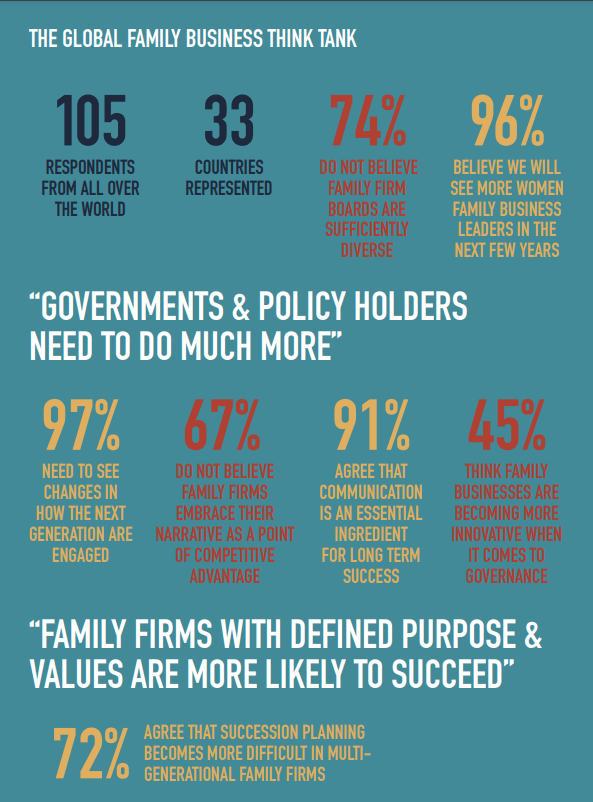
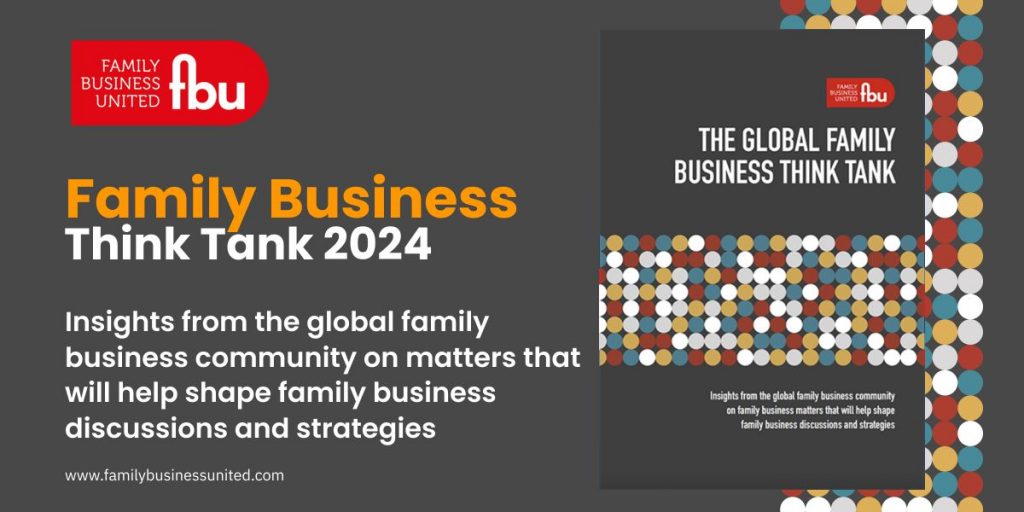
Family Business United’s Global Think Tank Report Spring 2024


I was delighted to be able to contribute to Family Business United’s inaugural Global Family Business Think Tank.

Contributions from many voices have created a valuable report on the insights shaping family business discussions and decisions.

In the words of Paul Andrews, FBU’s CEO, “This report highlights in many respects the positive way that family businesses embrace change, new ideas and ways of working, and how they are pioneering in many respects, but there is also opportunity to do more, to raise the bar further and to be more innovative in the way that the family business sector comes together to make change a positive force for good and provide families in business insights, resources and further support to flourish for generations to come.”

Read the full report The Global Family Business Think Tank | FAMILY BUSINESS UNITED

Family Matters: Looking after your family by avoiding a contentious estate: The role of trusts in estate planning

We have all seen the stories of families being torn apart over a disputed will. Not many parents would wish that on a family already grieving. And yet a recent FT article indicated that there are still too many families where a simple lack of communication has created unnecessary conflict and wills being contested.

How to make your wishes clearly known

Proper inheritance tax planning and having a will in place together with a letter of wishes, provides clarity and avoid disputes. Whilst a letter of wishes is not legally enforceable, it is always helpful to know the deceased’s thoughts behind their will.

There is always a risk that a dependent (not necessarily a minor) could make a claim against the estate under the Inheritance (Provision for Family and Dependants) Act 1975. This Act allows a dependent to make a claim against the estate on the grounds that they were maintained by the deceased prior to death and have been left without financial provision. This highlights the importance of seeking professional advice when drafting your will and why having a letter of wishes in place would be useful.

Conflicts between children of former marriages

A common situation which we frequently come across are blended families where couples remarry and have children from former marriages. In this case. it is usually the deceased wanting their surviving spouse to benefit from their estate but ultimately, they would like their assets to pass to the children from the first marriage. If your will passes assets to the surviving spouse outright, there is no guarantee that the children from your former marriage will receive anything, and you are solely relying on the surviving spouse to ‘do the right thing’ either by making lifetime gifts or having provisions under their will.

Whilst the relationship may be all well and good at the time, this may not always be the case going forward and there is very little you can do if the surviving spouse reneges on their initial intentions.

With the use of trusts and proper estate planning, this kind of dispute could be avoided and if structured correctly, you could minimise or avoid paying inheritance tax altogether.

Interest in Possession Trusts

The creation of an interest in possession (IIP) trust set up within your will is an ideal structure for a situation such as the above. An IIP trust allows the ‘life tenant’ to enjoy the assets or the income of the trust during their lifetime or as such times dictated by the trust deed, for example, until the surviving spouse is 50 years old or re-marries. The life tenant in this situation would be the surviving spouse. They would not have any automatic rights to the assets of the trust but the trustees could make distributions to them at their discretion. When the life tenancy ends, the trust assets would pass outright to the remainderman. The remainderman in this case would be the deceased’s children from the first marriage. This could work really well for certain assets such as the family home and tax could be avoided altogether if the family home was gifted to the children at the right time.

Certain assets passing to the children during the life tenant’s lifetime could trigger capital gains tax depending on the asset and how much it has increased in value, but the CGT rates are currently much lower than the IHT rates and CGT is only payable on the increase in value, not on the full value of the asset itself.

What about family businesses?

If there is a trading family business, then this could be put into a discretionary trust with the surviving spouse and the children as the beneficiaries. A discretionary trust allows the trustees to decide who and when a beneficiary can benefit from the income and the assets from the trust, i.e. the trustee would have full discretion over the trust. The beneficiaries would usually be a class of individuals chosen by the deceased before they die. This allows both the surviving spouse and the children to benefit from any dividends received by the trust and also allow the assets to be distributed to the beneficiaries as and when they require it.

Young children in particular could benefit from this as they may be of an age where they are too young to look after their financial affairs. There is also the added bonus that some/all of the income tax paid by the trust could be reclaimed by the beneficiaries where they are not additional rate taxpayers.

If the trustees wanted to distribute the shares in the family business to the children in the future they can do so without paying tax if the asset qualifies for Business Property Relief. Furthermore, discretionary trusts have the added advantage of being able to benefit from CGT holdover relief. Holdover relief is form of relief which allows individuals and trustees to defer paying CGT when a gift is made to/from a discretionary trust subject to certain conditions being met.

If you are thinking about estate planning and would like bespoke advice on how to structure your assets in a tax efficient manner, please contact Reena Bhudia on 020 7874 8855 or rbhudia@goodmanjones.com.

What do the changes to CGT mean for family businesses?

Family businesses could see three key areas impacted by changes to capital gains tax proposed by the Office for Tax Simplification last month:

  1. Succession planning
  2. Cash extraction
  3. Share options for retaining key employees

The key changes

In their report released on 11 November 2020, the Office for Tax Simplification (OTS) made the following recommendations:

  • Align capital gains tax (CGT) rates with those of income tax.
  • Replacing entrepreneurs’ relief with retirement relief
  • Slashing of the CGT annual exemption
  • Removal of CGT uplift on death

Succession planning

Succession planning with a family business usually involves getting company shares into the hands family members or managers. This can be done during the lifetime of the owner, upon their death, or a mix of the two. However succession is approached, there will be CGT and inheritance tax (IHT) consequences:

  1. If shares are gifted during lifetime, CGT can be deferred if the company is trading and there shouldn’t be IHT to pay due to business property relief (BPR).
  2. If shares are sold, then CGT will be payable but potentially only at 10% if entrepreneurs’ relief is available.
  3. If shares are gifted on death via a Will, then there is a CGT-free uplift to market value, and again IHT should be nil due to BPR.

The OTS report could make the latter two options more expensive. They have proposed changing business asset disposal relief (aka entrepreneurs’ relief) to retirement relief, which would restrict the 10% tax rate to those at retirement age, whilst increasing the 5% shareholding test to 25% and the holding period from 2 years to 10 years. For certain shareholders selling their shares, this would mean 20% tax, or up 45% if CGT rates are aligned with income tax.

The OTS also suggest removing the CGT uplift on death, so that the base cost of inherited shares is no longer their value at the date of death, but instead the value that the deceased acquired them for. For family businesses this is often a negligible amount, so this proposal would greatly the future CGT liability if the shares were subsequently sold.

It is possible to pass on shares to the next generation without incurring CGT by spreading gifts out over many years, utilising annual exemptions. This has been generally used by owners of non-trading companies who cannot use hold-over relief to defer capital gains. However, this practice would be curtailed by proposals to reduce the annual exemption from £12,300 per year to between £2,000 and £4,000.

Cash extraction

Companies often accumulate excess profits over the years, which the owners haven’t needed to draw on as salary or dividends. If the business comes to the end of its life, the company can be liquidated and this excess cash extracted at capital gains tax rates of 20% (or sometimes 10% with entrepreneurs’ relief), rather than treated as income.

If CGT rates are aligned with income tax rates then extracting these rolled-up profits will get much more expensive. Even if the Government decide to keep CGT rates as they are, the OTS has recommended that distributions of rolled-up profits are treated as dividends and tax at rates of up to 38.1%.

Share options for retaining key employees

The EMI scheme, which allows selected employees to enjoy CGT rates on gains on share options, is a very tax efficient way to reward key employees and to retain them by giving them a stake in the company. However, the scheme is at risk of being scrapped due to the ability to target certain employees.

Planning

Rishi Sunak prepared the ground for future tax rises in his recent spending review, so these proposals could be implemented in the Budget expected next spring. It would seem prudent to accelerate existing plans for company liquidations ahead of this, or to put in place an EMI scheme in case these are scrapped going forward.

Family Businesses – The Engine Room of the National Economy

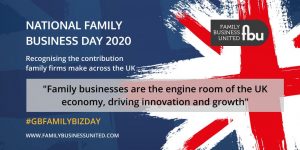
Family firms across the UK are the very heart of the nation and as a firm that advises many families in business we are delighted to be taking part in National Family Business Day 2020.

Family firms come in all sizes and sectors and many have been around for hundreds of years, successfully passing from generation to generation. In fact the oldest direct lineage family firm dates back to 1515, RJ Balson the butchers on the High Street in Bridport which is now in the 26th generation and clearly demonstrates that family firms have the ability to last successfully for generations. Family firms can be found on High Streets the length and breadth of the UK and they are the fabric of the communities in which they operate, providing jobs, income, creating wealth and supporting communities.

As a sector, family firms really are the engine room of the UK economy with around 5 million family firms in the UK today providing more than 13 million jobs and accounting for around 25% of GDP. Clearly, the family business sector is a force to be reckoned with and one that deserves to be recognised.

Organised annually by Family Business United, the award-winning magazine and resource centre for family firms, the event is now in its seventh year and continues to grow year on year. As Paul Andrews, founder of Family Business United explains, “This is a real day to celebrate the family business sector, businesses at the very heart of the nation and across all sectors of the economy too. Every part of life on a daily business is supported by family firms from the food and drink we consume, to the places we visit, the hotels we stay in, the homes we live in and the products that we use such as cars, hospitals and gyms. This diverse sector deserves to be recognised and National Family Business Day is a great way to put the sector on the map.”
As Paul continues, “Family firms have a story to tell, a real narrative borne out of families working in business together, creating a legacy that will hopefully endure for generations. It is this that makes family businesses special along with the underlying values such as passion, drive, integrity and desire to do the right thing time and time again. 2020 has not been the easiest of years and a day focusing on the family business sector will provide a great opportunity to show our support for the sector.”

At Goodman Jones, family businesses are our passion. We have advised and supported many families over the years and love watching the businesses develop and new generations coming in. To us, this part of the UK economy adds so much. Their agility combined with their long term outlook means that they are often the ones leading the way when it comes to new ideas, investing in local communities and international expansion. Its what makes them so exciting to work with. Whilst this is without doubt a very challenging year, I am sure that it will be the thinking coming from families in business that will help the economy to Build Back Better.

As Paul concludes, “FBU is all about the family business sector and it is a real privilege to champion family firms each and every day. Family firms are special, they are the backbone of the UK economy and will be for generations to come and we look forward to showcasing the diversity of the sector on National Family Business Day this year.”

Family Business of the Year Awards 2020

SMEs will be a vital part of the path to getting UK business back up and none more important than family businesses.

Having been involved in the Family Business of the Awards we have  been seriously impressed by many of the submissions from the excellent family businesses involved.  Spanning different industries, these successful family businesses have highlighted some vital strengths; a long term outlook, innovative attitude and agility. Watching so many of them adapt and pivot in response to the pandemic has reiterated that these are dynamos of the economy.

We look forward to congratulating all the awards participants this evening, and good luck to the finalists!

The true value of strategic succession planning for families in business


Taken together, some of the statistics from a recent Family Business Survey are particularly enlightening.

The survey found that the overwhelming majority of family firms (85%) intend to remain family-owned. Yet while almost half (46%) are worried about the long-term sustainability of their company, only 38% have a succession plan in place.

For family businesses, long-term success is especially dependent on effective succession planning. Yet it’s hard to get right – and that’s precisely because they’re family-owned. It gets complicated by the personalities, relationships and emotions of the people involved.

That’s why it has the potential to go devastatingly wrong.

In one case I know of, a well-meaning father divided his business between his two children, without discussing their own aspirations with them. One sibling had no interest in being part of the firm, and simply wanted to cash out. The result was a bitter lawsuit, causing untold damage to the family dynamic.

A strategic approach

Charlotte at the 2019 Family Business of the Year Awards

While participating in the judging process for the 2019 Family Business of the Year Awards, it was clear to me that successful firms approach succession strategically.

Family Business of the Year Awards 2019

They put a professional decision-making process in place, often with the help of specialist family business advisers (FBAs). This replaces emotions and knee-jerk reactions with logical and rational long-term business planning.

The task of strategic succession planning should begin with an objective information-gathering exercise. At Goodman Jones, we do this by speaking to all family members, whether they work in the business or not, as well as major stakeholders from outside the family (such as company directors, senior managers, advisers or shareholders).

This helps to achieve several crucial outcomes:

• It gives everyone concerned a safe space to express their ambitions and desires for the business, the family and themselves.

• It promotes an open discussion between family members about their visions of the future – which can lead to new ideas and opportunities, such as offering complementary services.

• It allows us to test and – if necessary – challenge any assumptions from family members about what others might want.

• It reveals any differences between the aims of the different generations involved.

• It provides a base from which to seek any compromises that may be required, and establish a plan that everyone’s happy with.

• It identifies any skills gaps in younger family members who intend to take a role in the business, so that training can be arranged well in advance.

Then once the plan for the future is agreed, we can support the business and the family with tax planning, advice on transactions and/or exit, and training and development for the next generation. And we’ll work with the family to regularly revisit the plan, and update it as needed.

More than a business plan

However, the real value of strategic succession planning goes far beyond such practicalities. Many of our family business clients tell us that they get much more from the process than a robust plan.

They often find that the strategic and commercial vision for the business is more unified, and more coherently defined. And they come away with improved and more open relationships; certainty over the future; and confidence that they’ve made the right decisions for the business and their family.

It’s never too soon to plan for the future. Not to mention for the unexpected: illness, death, and life-stage changes such as the birth of children can suddenly change the equilibrium of a family firm.

So think about investing in the long term now; there really is nothing more important for your business and your family.

What makes a great family-run hotel business?

We recently had the pleasure of taking part in judging the Family Business United annual national awards, Hotel & Leisure category. The process got us thinking hard, just what is it that makes a family business so successful, and specifically how does this apply to a family run hotel business?

The key points that we identified were:

Clarity and Unity of vision

The clarity and unity of vision of the family members both running the hotel and providing investment behind the scenes. As well as ensuring good governance, this also means aligning and managing family involvement and interests beyond those directly involved in the business.

Focus on the essence of the business

The ability to focus on the essence of what attracts guests but ensuring that how that’s delivered evolves over time. Whatever it is that makes the hotel different, whether that’s about appealing to families, pampering adults or simply delivering a top quality service, needs to evolve to fit the current market expectations and adapt to new trends. Hotels have failed because they’ve stuck rigidly to how previous generations have operated in the belief this is what will work today. This encompasses understanding the current market and adapting to new trends.  It also includes integrating and embracing the latest developments in technology, from EPOS to green recycling schemes.

Imparting the vision and values throughout the entire organisation

The success of the business will by necessity involve a strong management team. Part of their role is understanding and imparting the vision and values throughout the entire organisation. This should flow through into everything that the hotel does, from the initial guest welcome right through to the special touches at breakfast.


Having a clear, impartial view of the skills needed in the business

Given the 24hr nature of running a hotel, it is typical that some key roles within the business may not be performed by the family members themselves, and so motivating and listening to ideas from outside the family is also vital. The family must identify and develop talent within the staff team, which in turn will nurture and strengthen the internal culture of the business.

Engaging with the community the business is part of

To have the support of, and engagement with, the local community brings a two-way benefit to any local business. For a family there will be multiple connections with the local community and these often lead to differentiating the hotel from the competition. For example, the restoration of a historical building using local materials, right through to hosting the local school sports day.

Long term strategy and succession planning

Long-term strategy and succession planning. It’s never too early to start encouraging the younger generation to participate, whether through developing new business streams such as wedding planning and photography, or supply-chain integration to provide a farm-to-table experience.

Solid financial model

A strong financial model will provide a stable basis on which to grow the business. It should include a strong budgeting process. This will ensure they are able to make reliable cashflow projections and also scrutinise and understand the cost base to determine whether any cost savings can be made. A good model not only enables forward planning but will allow  management to focus on the business operations rather than spending a lot of time on financial reporting.

What we loved most about being involved in the judging process was seeing the enthusiasm and passion that each of the family businesses had. Their core values really shone through, demonstrating that caring for the environment and their local community was equally as important as ensuring that staff were happy and that the business was growing profitably.

The winning combination? Clear vision and values, a united family and management team, and solid financials.

Possible extension of Entrepreneurs’ Relief: Consultation wants to hear from Family Businesses

Philip Hammond, the Chancellor, had promised that his Spring statement would not contain tax announcements. He was true to his promise, well almost.

Amongst the usual statements about economic growth, employment prospects and borrowing needs there were congratulatory comments about the numbers of persons that have benefitted from first time buyer stamp duty reliefs and further suggestions that a litter levy may be enacted. On the theme of waste there was also a call for evidence on how the tax system could be used as an incentive to reduce reliance on certain plastics.

Of relevance to the SME sector is the announcement of a consultation on extending the availability of Entrepreneurs’ Relief. The Government are concerned that bringing external investors into a family business can dilute the founders down below a 5% stake in a company. As the 5% limit is the minimum required for Entrepreneurs’ Relief the Government feel that some businesses may not seek external funding specifically to prevent the founders falling below 5%. The 5% threshold may therefore hold back the seeking of external funds and therefore hold back growth in a business.

There is a consultation which closes in mid-May about the practicalities of allowing the founders to be treated as selling their shares and immediately reacquiring them at the point that they would otherwise be diluted down 5%. This would therefore allow the entrepreneur to “bank” the 5% rate before they are diluted below it.

The cynic may think “well that is just a way of getting money in earlier and leaving reduced tax take for a future Government”. The consultation suggests otherwise as it is making noises about the resulting gain not being payable until such later time as the shares are actually sold and the entrepreneur has cash to pay the tax.

This is certainly a novel solution for a perceived issue and the Chancellor should be applauded for facing it head on.


When succession is a challenge

But for all your careful thought and preparation, things don’t always go as intended.

In our long experience of helping family businesses with succession, there are two situations that can go awry. You may decide that only some of your offspring should be involved in running the business – or potentially, none at all.

Some in, some out

If some of your children are to take over, and others aren’t, how do you make sure they all benefit from the family wealth? And how do you find an arrangement that everyone is satisfied with?

This demands some delicate management. The key is to understand what works for each family member – and of course for the business.

To state the obvious, it generally goes one of two ways: dispute, or agreement (invariably with a degree of compromise).

Dispute

Problems can arise when owners singlehandedly decide to divide the business up between all of their children. It’s quite common to discover that those not involved in the firm aren’t interested in share ownership.

Though well intentioned, share ownership doesn’t always suit those who won’t be involved in the firm. They may prefer to ‘cash out’ straight away.

This can lead to disputes over the value of the shares they’re being given. The result may be a protracted and costly litigation, which requires the new owner(s) to raise funds and buy their siblings out.

It sounds drastic, but we’ve seen this happen when due care and attention aren’t given to the succession process. Such cases can be distressing, as they put severe pressure on family relationships.

Having a skilled family business adviser can help with the stresses and strains of what is undoubtedly a difficult process. We can not only help firms to raise and structure funding; we’ll also act as a personal mentor, and an impartial mediator between family stakeholders, to help reach an agreement everyone’s comfortable with.

Agreement

If not everybody wants share ownership, the answer may be to give this to those who take over; and bequeath other assets – your house, for example – to their siblings.
Once an arrangement has been found, you’ll need an expert to take you through the business valuation process; and the statutory process of transferring share ownership. You should also seek advice on the capital gains , inheritance and other tax implications for all concerned.

All out

The result of your succession planning may be that none of your children are capable of, or interested in, taking over the business.

In this case, there are two routes open to you: sell the company, or retain ownership and make an external appointment.

Sale

Selling the firm may involve a management buyout (MBO) or an external third party.

If external, there may be scope for some or all of the management team to stay on, for the short term or permanently.

Whatever the arrangement, think about whether you want to remain in the business for a transition period. Some buyers may prefer this arrangement.

Selling will mean getting a valuation of the business, and appointing an agent to find a buyer. We can run the sales process for you and optimise your post-sale tax position. You might also need a bit of moral support: seeing the business leave the family can be an emotional time.

Appointment

Retiring from the business won’t necessarily mean giving up ownership. You could appoint someone from outside of the family to run it for you.

Again, this can prove an emotional wrench. It can be difficult for family business owners to give up control of something they’ve spent years building, and which may have been in the family for several generations.

Then there’s the performance risk that comes with somebody running the firm who doesn’t know it like you do (and lacks the same emotional investment). You might want to incentivise external appointees with a percentage of the proceeds from a future sale. Again, this needs careful implementation and specialist tax advice.

Be objective

Succession is partly a business decision. But it’s also a people decision: a decision about not just abilities, but also ambitions and personal relationships.

Crucially, it must be an objective decision. Yet taking an impartial view of your children’s capabilities and drive won’t be easy. At the same time, you mustn’t encourage someone to take over without the vision to ensure your business thrives under their leadership. And you mustn’t assume that all of your sons and daughters will want ownership.

Whatever your succession strategy, the need to start the process early can’t be overstated. It takes time to groom the next generation, or to find external appointees who are right for your business.

Getting succession right is vital for the future of your business and your family. Don’t put yourself under pressure to make decisions in a hurry, or leave yourself with no option but to sell under duress.

To discuss how Goodman Jones can help you to plan for succession at your family business, contact us.

This is part three of a series of blogs on family business succession. You can read the first two instalments here.


Family wealth preservation using a Family Investment Company

Traditionally a tool for family wealth preservation has been a trust. However successive governments have cut down their tax benefits. This led to a rise in debate about the benefits of using a family limited partnership instead. Although many advisers talked about these partnerships, comparatively few had clients who implemented them. Their relative lack of popularity may have been due to concerns about collective investment scheme legalisation and the professional costs of their maintenance. An alternative could be a Family Investment Company.

What is a Family Investment Company?

A Family Investment Company (FIC) is a UK resident private company whose shareholders are almost invariably entirely made up of family members. Assets are transferred into the FIC and those assets generate investment returns which can be used to provide family wealth. Alternatively, returns can be directed to be used for things such as payment of school fees.

Family investment company helps to protect family wealth

With the UK having a corporation tax rate starting at just 19%, interest in family investment companies has risen.  They are typically used to spread wealth throughout the family or as inheritance tax efficient vehicles. As they are structured around UK companies, the foundations on which they are built are well understood, easy to implement and have low annual compliance costs.

How does a Family Investment Company work?

Typically the founders transfer cash into the company in exchange for shares and loans. Non-cash assets such as property can be also transferred into the company but this may lead to stamp duty land tax or capital gains tax concerns.

The founder can then gift shares of the company to other family members as a potentially exempt transfer. There would be no inheritance tax consequences on the donor if they survive seven years following the date of the gift. Assuming that the gift occurs soon after creation of the company then there are no capital gains tax concerns for the donor.

Control

It is common for the Articles of the company to be drafted so that the donor retains control over the company and this is where the company can operate like a trust. One of the advantages of a FIC over a trust is that some people feel they have more direct control through share ownership than the less tangible control that they have over trust assets.

Tax position

If the FIC generates rental or interest income then this will be taxable at the low UK corporate rate of tax. Dividends received by the FIC could be tax free.

There is tax payable on distribution of assets out of the company. However with the first one thousand pounds of dividend being tax free and a follow on rate starting at 8.75% this may not be a concern. Even the highest rate of dividend tax is lower than the 45% rate currently applied to trusts.

A FIC should be considered a medium to long term strategy in the same way as a trust is considered a long term strategy tool.

Requirements and disclosure

As a FIC is based on a UK company there are Companies House filing requirements, including annual accounts which will be on public record. Public filings can possibly apply the reduced disclosure of abridged accounts (where permitted) or consideration maybe given to using an unlimited, and not a limited, company.

Conclusion

It may be felt a reflection of the UK government’s strategy on low corporate taxation that a UK company, for the benefit of UK individuals, may be an appropriate, low risk and tax efficient holding vehicle.

A FIC should be considered a medium to long term strategy in the same way as a trust is considered a long term strategy tool.

[cta-family-business-subscribe]