Author Archives: Charlotte Jian - Partner

About Charlotte Jian - Partner

T +44 (0)20 7874 8875

Charlotte has responsibility for a varied portfolio of clients, and is particularly passionate about family-run businesses, many of which operate in the hospitality and leisure industries.

She is committed to developing close working relationships with clients to deliver a personal and seamless added-value service.

We know that family businesses are great at taking a longer-term outlook – and that extends to helping their potential successors to learn about all the various aspects of the business operations.

But what we’ve also heard from those in the Next Generation considering whether to join the board is that understanding how to read and interpret the financial information may not receive quite the same level of attention. We’ve heard of newly appointed directors being asked to vote on crucial and potentially big number decisions but without having had much help understanding what the financial reports or projections actually mean. For example, understanding the Balance Sheet, Profit or Loss Statement, and Cashflow Statement, and what a ‘good’ set of financial statements looks like.

And yet this is vital in order to make relevant and informed decisions, to understand the competition, as well as ensuring that your family business remains financially ‘healthy’. In the words of one of the FBU champion’s at last year’s conference, “Keep close to the numbers.”

Deciding whether to take over the family firm involves careful consideration of various financial indicators to assess the company’s current health and future potential. In addition to the annual financial reports, these are some of the key financial indicators to bear in mind:

Profitability: how much money is the business making?

  • Gross Profit Margin: Indicates the percentage of revenue that exceeds the cost of goods sold. A higher margin suggests better efficiency in production or service delivery.

  • Net Profit Margin: Measures the percentage of revenue that remains as profit after all expenses, including taxes and interest. It reflects the company’s overall profitability.

Liquidity & cash flow: how much cash is the business generating? Is there a cash flow problem?

  • Current Ratio: Compares current assets to current liabilities, indicating the company’s ability to cover short-term obligations. The higher the ratio, the better!

  • Working Capital: Current assets less current liabilities. This indicates the business’s available funds to finance day-to-day operations.

  • Operating Cash Flow: Evaluates the cash generated from the company’s core business operations. Positive operating cash flow indicates the company can both sustain and grow its day-to-day operations.

Leverage Ratios: how much debt is there is in the business? How much financial flexibility is there?

  • Debt-to-Equity Ratio: Measures the proportion of debt financing relative to equity. High debt levels can indicate financial risk, while low levels may suggest stability but could also mean missed growth opportunities. This is often a condition of any bank loan borrowing.

  • Interest Coverage Ratio: Indicates the company’s ability to cover interest expenses with operating income. A higher ratio indicates a better capacity to meet debt obligations as they fall due.

Growth Indicators: how quickly is the business growing?

  • Earnings Per Share (EPS) Growth: Reflects the growth in earnings available to shareholders over time. Positive EPS growth suggests improving profitability.

Market Valuation: how much is the business worth?

  • Price-to-Earnings (P/E) Ratio: Indicates the company’s valuation relative to its earnings. A lower ratio may suggest undervaluation, while a higher ratio could indicate strong performance but also overvaluation. This is often used as a relative value comparison tool.

What about EBITDA?

Definition – EBITDA (Earnings Before Interest, Taxes, Depreciation, and Amortisation) is a widely used financial metric that applies to both public and private companies, including family-owned businesses. EBITDA is a measure of the business’s ability to generate income, often used as a proxy for operating cash flow and is particularly relevant in the context of assessing a company’s profitability and financial performance.

EBITDA can be valuable when evaluating the operational efficiency and profitability of a business because it focuses solely on the core operating performance, excluding the effects of different financing decisions, accounting methods, and tax environments.

Here’s how EBITDA can be relevant when considering taking over a family business:

  • Profitability Assessment: EBITDA provides a clear picture of a company’s ability to generate profits from its core operations before considering the impact of interest, taxes, depreciation, and amortisation. This metric allows for a more straightforward comparison of profitability against direct competitors.

  • Cash Flow Measurement: EBITDA represents cash flow generated by ongoing operations, and so is useful for assessing a company’s ability to generate cash to cover operating expenses, capital expenditures, and debt obligations.

  • Valuation: EBITDA is often used as a basis for valuation multiples in mergers and acquisitions. It can help potential buyers or investors determine the company’s worth by applying a multiple to its EBITDA.

  • Financial Health: EBITDA can indicate the financial health and stability of a company, as higher EBITDA margins suggest stronger operational efficiency and profitability, particularly if there is growth year-on-year.

While EBITDA can be a useful metric, it also has its limitations. EBITDA does not reflect capital expenditures necessary to maintain or grow the business, nor does it permit consideration of changes in working capital requirements. Therefore, it’s important that EBITDA is considered along with those other financial indicators held to be key for that particular family business.

Spending time with the business’ accountants and other trusted advisers as well as conducting thorough due diligence, where necessary, are also essential steps in the decision-making process.

Lastly, it is imperative to note that assessing financial indicators alongside identifying qualitative factors such as industry trends, competitive landscape, potential strengths/weaknesses, and the company’s strategic objectives will provide a more comprehensive understanding how the family business is performing and will better inform all decisions.

This article was originally posted to the Family Business United website.

0

The information in this article was correct at the date it was first published.

However it is of a generic nature and cannot constitute advice. Specific advice should be sought before any action taken.

If you would like to discuss how this applies to you, we would be delighted to talk to you. Please make contact with the author on the details shown below.

Comment on this...


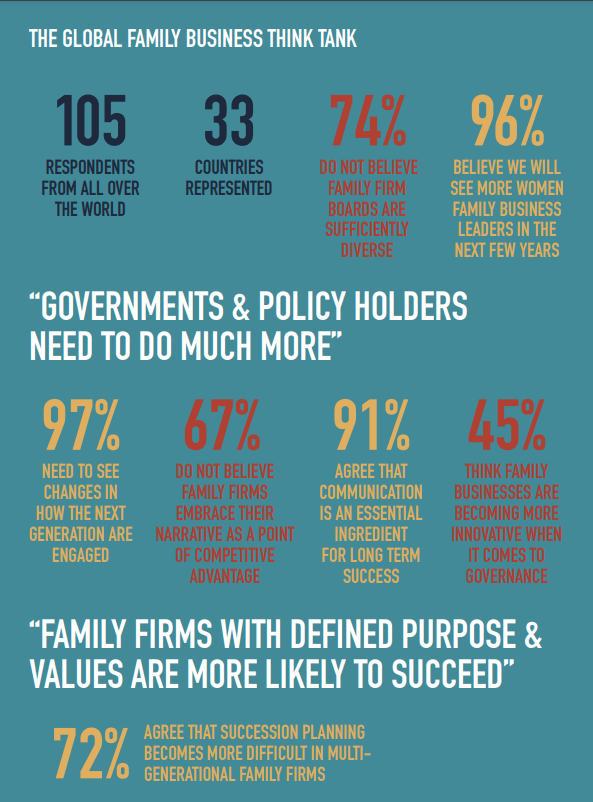
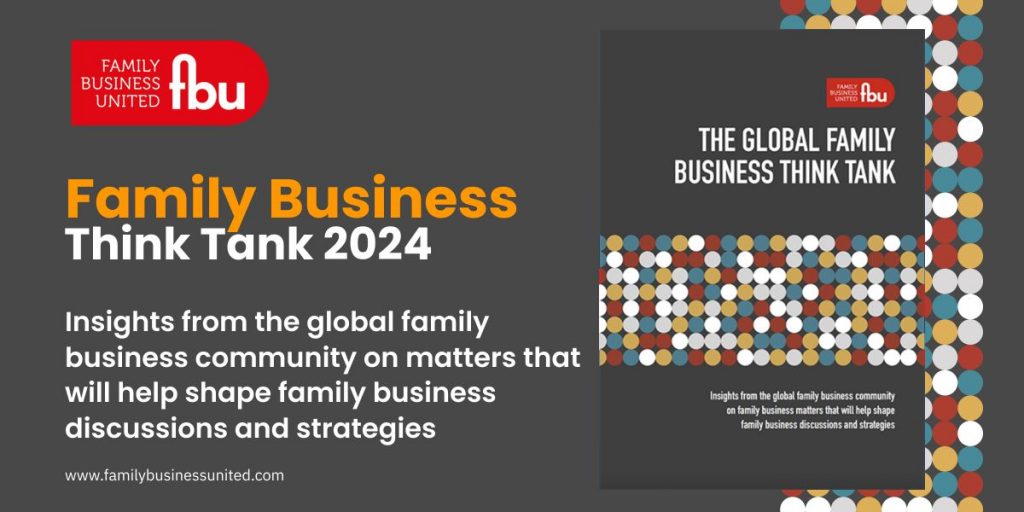
I was delighted to be able to contribute to Family Business United’s inaugural Global Family Business Think Tank.

Contributions from many voices have created a valuable report on the insights shaping family business discussions and decisions.

In the words of Paul Andrews, FBU’s CEO, “This report highlights in many respects the positive way that family businesses embrace change, new ideas and ways of working, and how they are pioneering in many respects, but there is also opportunity to do more, to raise the bar further and to be more innovative in the way that the family business sector comes together to make change a positive force for good and provide families in business insights, resources and further support to flourish for generations to come.”

Read the full report The Global Family Business Think Tank | FAMILY BUSINESS UNITED

0

The information in this article was correct at the date it was first published.

However it is of a generic nature and cannot constitute advice. Specific advice should be sought before any action taken.

If you would like to discuss how this applies to you, we would be delighted to talk to you. Please make contact with the author on the details shown below.

Comment on this...

Family firms across the UK are the very heart of the nation and as a firm that advises many families in business we are delighted to be taking part in National Family Business Day 2020.

Family firms come in all sizes and sectors and many have been around for hundreds of years, successfully passing from generation to generation. In fact the oldest direct lineage family firm dates back to 1515, RJ Balson the butchers on the High Street in Bridport which is now in the 26th generation and clearly demonstrates that family firms have the ability to last successfully for generations. Family firms can be found on High Streets the length and breadth of the UK and they are the fabric of the communities in which they operate, providing jobs, income, creating wealth and supporting communities.

As a sector, family firms really are the engine room of the UK economy with around 5 million family firms in the UK today providing more than 13 million jobs and accounting for around 25% of GDP. Clearly, the family business sector is a force to be reckoned with and one that deserves to be recognised.

Organised annually by Family Business United, the award-winning magazine and resource centre for family firms, the event is now in its seventh year and continues to grow year on year. As Paul Andrews, founder of Family Business United explains, “This is a real day to celebrate the family business sector, businesses at the very heart of the nation and across all sectors of the economy too. Every part of life on a daily business is supported by family firms from the food and drink we consume, to the places we visit, the hotels we stay in, the homes we live in and the products that we use such as cars, hospitals and gyms. This diverse sector deserves to be recognised and National Family Business Day is a great way to put the sector on the map.”
As Paul continues, “Family firms have a story to tell, a real narrative borne out of families working in business together, creating a legacy that will hopefully endure for generations. It is this that makes family businesses special along with the underlying values such as passion, drive, integrity and desire to do the right thing time and time again. 2020 has not been the easiest of years and a day focusing on the family business sector will provide a great opportunity to show our support for the sector.”

At Goodman Jones, family businesses are our passion. We have advised and supported many families over the years and love watching the businesses develop and new generations coming in. To us, this part of the UK economy adds so much. Their agility combined with their long term outlook means that they are often the ones leading the way when it comes to new ideas, investing in local communities and international expansion. Its what makes them so exciting to work with. Whilst this is without doubt a very challenging year, I am sure that it will be the thinking coming from families in business that will help the economy to Build Back Better.

As Paul concludes, “FBU is all about the family business sector and it is a real privilege to champion family firms each and every day. Family firms are special, they are the backbone of the UK economy and will be for generations to come and we look forward to showcasing the diversity of the sector on National Family Business Day this year.”

0

The information in this article was correct at the date it was first published.

However it is of a generic nature and cannot constitute advice. Specific advice should be sought before any action taken.

If you would like to discuss how this applies to you, we would be delighted to talk to you. Please make contact with the author on the details shown below.

Comment on this...

SMEs will be a vital part of the path to getting UK business back up and none more important than family businesses.

Having been involved in the Family Business of the Awards we have  been seriously impressed by many of the submissions from the excellent family businesses involved.  Spanning different industries, these successful family businesses have highlighted some vital strengths; a long term outlook, innovative attitude and agility. Watching so many of them adapt and pivot in response to the pandemic has reiterated that these are dynamos of the economy.

We look forward to congratulating all the awards participants this evening, and good luck to the finalists!

0

The information in this article was correct at the date it was first published.

However it is of a generic nature and cannot constitute advice. Specific advice should be sought before any action taken.

If you would like to discuss how this applies to you, we would be delighted to talk to you. Please make contact with the author on the details shown below.

Comment on this...


Taken together, some of the statistics from a recent Family Business Survey are particularly enlightening.

The survey found that the overwhelming majority of family firms (85%) intend to remain family-owned. Yet while almost half (46%) are worried about the long-term sustainability of their company, only 38% have a succession plan in place.

For family businesses, long-term success is especially dependent on effective succession planning. Yet it’s hard to get right – and that’s precisely because they’re family-owned. It gets complicated by the personalities, relationships and emotions of the people involved.

That’s why it has the potential to go devastatingly wrong.

In one case I know of, a well-meaning father divided his business between his two children, without discussing their own aspirations with them. One sibling had no interest in being part of the firm, and simply wanted to cash out. The result was a bitter lawsuit, causing untold damage to the family dynamic.

A strategic approach

Charlotte at the 2019 Family Business of the Year Awards

While participating in the judging process for the 2019 Family Business of the Year Awards, it was clear to me that successful firms approach succession strategically.

Family Business of the Year Awards 2019

They put a professional decision-making process in place, often with the help of specialist family business advisers (FBAs). This replaces emotions and knee-jerk reactions with logical and rational long-term business planning.

The task of strategic succession planning should begin with an objective information-gathering exercise. At Goodman Jones, we do this by speaking to all family members, whether they work in the business or not, as well as major stakeholders from outside the family (such as company directors, senior managers, advisers or shareholders).

This helps to achieve several crucial outcomes:

• It gives everyone concerned a safe space to express their ambitions and desires for the business, the family and themselves.

• It promotes an open discussion between family members about their visions of the future – which can lead to new ideas and opportunities, such as offering complementary services.

• It allows us to test and – if necessary – challenge any assumptions from family members about what others might want.

• It reveals any differences between the aims of the different generations involved.

• It provides a base from which to seek any compromises that may be required, and establish a plan that everyone’s happy with.

• It identifies any skills gaps in younger family members who intend to take a role in the business, so that training can be arranged well in advance.

Then once the plan for the future is agreed, we can support the business and the family with tax planning, advice on transactions and/or exit, and training and development for the next generation. And we’ll work with the family to regularly revisit the plan, and update it as needed.

More than a business plan

However, the real value of strategic succession planning goes far beyond such practicalities. Many of our family business clients tell us that they get much more from the process than a robust plan.

They often find that the strategic and commercial vision for the business is more unified, and more coherently defined. And they come away with improved and more open relationships; certainty over the future; and confidence that they’ve made the right decisions for the business and their family.

It’s never too soon to plan for the future. Not to mention for the unexpected: illness, death, and life-stage changes such as the birth of children can suddenly change the equilibrium of a family firm.

So think about investing in the long term now; there really is nothing more important for your business and your family.

0

The information in this article was correct at the date it was first published.

However it is of a generic nature and cannot constitute advice. Specific advice should be sought before any action taken.

If you would like to discuss how this applies to you, we would be delighted to talk to you. Please make contact with the author on the details shown below.

Comment on this...

We recently had the pleasure of taking part in judging the Family Business United annual national awards, Hotel & Leisure category. The process got us thinking hard, just what is it that makes a family business so successful, and specifically how does this apply to a family run hotel business?

The key points that we identified were:

Clarity and Unity of vision

The clarity and unity of vision of the family members both running the hotel and providing investment behind the scenes. As well as ensuring good governance, this also means aligning and managing family involvement and interests beyond those directly involved in the business.

Focus on the essence of the business

The ability to focus on the essence of what attracts guests but ensuring that how that’s delivered evolves over time. Whatever it is that makes the hotel different, whether that’s about appealing to families, pampering adults or simply delivering a top quality service, needs to evolve to fit the current market expectations and adapt to new trends. Hotels have failed because they’ve stuck rigidly to how previous generations have operated in the belief this is what will work today. This encompasses understanding the current market and adapting to new trends.  It also includes integrating and embracing the latest developments in technology, from EPOS to green recycling schemes.

Imparting the vision and values throughout the entire organisation

The success of the business will by necessity involve a strong management team. Part of their role is understanding and imparting the vision and values throughout the entire organisation. This should flow through into everything that the hotel does, from the initial guest welcome right through to the special touches at breakfast.


Having a clear, impartial view of the skills needed in the business

Given the 24hr nature of running a hotel, it is typical that some key roles within the business may not be performed by the family members themselves, and so motivating and listening to ideas from outside the family is also vital. The family must identify and develop talent within the staff team, which in turn will nurture and strengthen the internal culture of the business.

Engaging with the community the business is part of

To have the support of, and engagement with, the local community brings a two-way benefit to any local business. For a family there will be multiple connections with the local community and these often lead to differentiating the hotel from the competition. For example, the restoration of a historical building using local materials, right through to hosting the local school sports day.

Long term strategy and succession planning

Long-term strategy and succession planning. It’s never too early to start encouraging the younger generation to participate, whether through developing new business streams such as wedding planning and photography, or supply-chain integration to provide a farm-to-table experience.

Solid financial model

A strong financial model will provide a stable basis on which to grow the business. It should include a strong budgeting process. This will ensure they are able to make reliable cashflow projections and also scrutinise and understand the cost base to determine whether any cost savings can be made. A good model not only enables forward planning but will allow  management to focus on the business operations rather than spending a lot of time on financial reporting.

What we loved most about being involved in the judging process was seeing the enthusiasm and passion that each of the family businesses had. Their core values really shone through, demonstrating that caring for the environment and their local community was equally as important as ensuring that staff were happy and that the business was growing profitably.

The winning combination? Clear vision and values, a united family and management team, and solid financials.

0

The information in this article was correct at the date it was first published.

However it is of a generic nature and cannot constitute advice. Specific advice should be sought before any action taken.

If you would like to discuss how this applies to you, we would be delighted to talk to you. Please make contact with the author on the details shown below.

Comment on this...