We help organisations and their owners and directors.
The organisations are UK based as well as international groups looking to invest into the UK. They tend to be established and growing entities.
We love working with clients across a broad range of sectors but have particular expertise in the areas listed. We also work with private individuals and families with their own personal tax matters, whether their wealth is UK-based or international.
Goodman Jones are not just Chartered Accountants and Auditors – but advisers who are passionate about providing an outstanding tailored service to each of our clients.
Our range of services are our response to listening to what our clients value.
We are not just Chartered Accountants and Auditors – but business advisers who are passionate about providing an outstanding tailored service to each of our clients.
Esther has worked with businesses across a variety of sectors, primarily focusing on small to medium sized companies. She has a particular interest in businesses in the creative and Leisure & Hospitality sector.
From Autumn 2025, Companies House will introduce mandatory identity verification for all individuals involved in setting up, managing, or filing on behalf of a UK company.
From Autumn 2025, Companies House will introduce mandatory identity verification for all individuals involved in setting up, managing, or filing on behalf of a UK company.
This applies to:
a person with significant control (PSC)
a director
the equivalent of a director – this includes members and general partners
anyone filing documents with Companies House
At the same time, a 12-month transition period will begin for existing directors and PSCs, who must complete identity verification by Autumn 2026. Companies House expects this to be done in line with your company’s next confirmation statement due date.
Identity verification is either done online directly through Companies House, or by an Authorised Corporate Service Provider (ACSP) using an approved online digital identification application.
As a registered ACSP, Goodman Jones is offering a trusted identity verification service to help you stay compliant.
Our service includes:
Secure identity checks using government-approved methods
Verification submission to Companies House on your behalf
Ongoing support to ensure continued compliance
What happens if you do not verify?
You will be unable to make filings or form new companies or entities
You may be committing a criminal offence and subject to financial penalties
Directors who continue in their role without verifying may face disqualification and further legal action.
PSCs who fail to verify may also be committing an offence.
If Goodman Jones is currently managing your Company Secretarial services, once the new mandatory rules are enforced, we will not be able to carry out these services until identification verification on all individuals affected by this change has been completed. We will be in touch to discuss the requirements further including any additional charges in due course.
If we do not currently act for your Company Secretarial services, and you need assistance with the identity verification requirements, simply reply to this email to receive a tailored quote.
We are here to help you navigate these changes smoothly. Please don’t hesitate to get in touch with any questions.
0
The information in this article was correct at the date it was first published.
However it is of a generic nature and cannot constitute advice. Specific advice should be sought before any action taken.
If you would like to discuss how this applies to you, we would be delighted to talk to you. Please make contact with the author on the details shown below.
Comment on this...
Share
From understanding supply chains to avoiding costly penalties, Rob provides essential insights for international businesses navigating UK VAT.
Esther Wood (EW): My name is Esther Wood. I’m a partner here at Goodman Jones. I also head up our international group. And today I have Rob Skilton with me, who is part of our GJ VAT team. We’re going to be covering a few questions in relation to international aspects of VAT registration requirements.
Rob Skilton (RS): I think, probably, given it’s my specialist area, I’m actually going to ask the first question, if I may. Given that you tend to have the first contact and interaction with the clients, what questions you normally get thrown at you when a new international overseas client gets in touch?
EW: Well, generally it’s something super basic, such as, do I need to register for VAT? Simple as that.
RS: A classic quick question that, unfortunately, as a VAT advisor, the first answer tends to be, well, it depends. Whilst that might be our initial reaction, trying to give something more than that and understand. But very often it’s dependent on what the supply chain looks like. So there can be a quick answer, but there can also be a bit more digging that we need to do before we can give that Yes or no.
EW: Yeah, yeah, that makes total sense. So you’ve got a couple of examples?
RS: So I, I think for a business, an overseas business that’s buying goods in the UK and then selling them on in the uk, that’s a pretty straightforward. You’re buying and selling goods in the UK – there’s a registration requirement over here as a result of that. Where it potentially gets a little bit more complicated is if we were to take an online retailer, for example, if they’re making sales of goods into the UK below £135, there’s a registration requirement arising from that. If they’re making sales above £135, then it really starts to depend on what their terms of trade are, where ownership transfers to their customer and who’s bringing the goods into the uk, and where that risk and reward hands over as to whether our overseas client has the registration requirement or not.
EW: Wow. Okay. £135 – quite low.
RS: Certainly is. Certainly is.
EW: So now we’re going to talk a little bit about group registrations. Some of the clients I work with have an overseas holding company with a number of UK subsidiaries. Is there any specific issues or things to bear in mind that we should be talking to our clients about?
RS: I don’t think there’s anything specific to the fact that it’s an Overseas holding company with UK subsidiaries, but there are various transactions that go through that would be require a bit of thought even where there’s a UK holding company. So things like management charges, interest on loans, all that sort of thing, even just supplies of services and goods between all of the members all have potentially different VAT treatments and we wouldn’t want to end up having a VAT charge that we can’t fully recover.
EW: No, no, for sure. Okay, so what about VAT groups? Can you tell us a little bit about those?
RS: Yeah, so by bringing a VAT group into place for the UK members of the corporate group, any transactions between those corporate members can be disregarded for VAT purposes. So where you’ve got an overseas finance team, they don’t have to worry about what the VAT treatment is. If we’ve got things like loan interest, which could be exempt from VAT and give us VAT recovery issues, all of that can be put to one side. So it can be quite attractive from that perspective.
EW: Okay, so what about if there’s just a branch in the uk?
RS: When there’s a branch in the UK, it can get quite interesting from a VAT perspective. So a lot of the VAT work that we do where we’ve got a UK branch and an overseas parent is often just trying to -a gain, it comes back to identifying that supply chain and understanding who’s making the supply, where the transaction sits. And we’ve got a couple of clients that we work on together where you’ve got the overseas parent is making a supply to certain UK customers. You’ve got a UK branch which is also making supplies. So it’s really just identifying who’s making which supply, whether there’s UK VAT due on that or not, and making sure that we’re getting the right things on the VAT return when we’re helping prepare and submit that.
EW: Okay, so just moving on to compliance issues, you and your team do some great work for my overseas clients. What are the kind of common queries or issues that have been arising since you’ve been working on those for the past year or so?
RS: I think probably the common issues we come across is just we get the invoices where there’s a purchase that’s got UK VAT charge that they want to get the VAT back on. We get a list of the sales that they’ve made because that’s sort of the obvious information that we’re looking for. Yeah, I guess the bits that tend to drop that slip between the cracks where we’ve got the transactions that are subject to a bit of a reverse charge type procedure. So where there’s a purchase from an overseas supplier, where there’s some postponed import VAT, where goods have been brought into the country and for most clients, where they’ve got sort of fully taxable businesses and can recover the VAT in full, the transaction, you’ve sort of got an output tax charge that they’re paying to HMRC on behalf of the supplier, you’ve got full VAT recovery against that going through the return. So it’s a bit of a nil net position that comes to nothing but needs to go on the return for statistical purposes. And they’re very often the ones that sort of slip between the cracks.
EW: Yeah, I’m sure because they think there’s no net effect, they kind of probably think, well, what’s the point of disclosing that? But yeah, it’s still important to disclose everything and not to miss those in case of any investigation, I guess.
RS: Yeah, absolutely, yeah. It’s when HMRC come looking at things, if you’ve missed things like that off the return, it just starts to trigger a few good questions and doubts in HMRC’s mind about, well, what else isn’t on the return that perhaps ought to be.
EW: So are you able to kind of translate some of the kind of intricacies of the terminology that often gets used and confuses clients and colleagues?
RS: So I guess the sort of obvious one is around the VAT treatment of supplies because we being VAT people have loads of terminology which I love and hold dear to my heart and clients perhaps less so. Thinking of an example, we have transactions that are outside the scope of UK VAT because the customer’s based overseas. For charities we have outside the scope because it’s a non business activity, such as grant funding. We have exempt transactions such as loan interest and then we have zero rated transactions as well which are subject to vat. But at zero percent and from a client’s perspective there’s no VAT charged on any of this income or accounted for on it. So it’s a little bit of, well, what’s the difference? It sounds like we’re just being a little bit pedantic with technical people, but actually from a VAT recovery perspective there’s all slightly different outcomes with those. Potentially some of those transactions you do get VAT recovery on costs, some of them you don’t. So that’s why perhaps at times we do come across as a little bit, as I said, a little bit pedantic, perhaps, trying to get the terminology right, because the impact of that is there, even if the client doesn’t necessarily always see it.
EW: So coming on to non compliance, I mean, it’s quite difficult setting up a business in the UK and we would never advocate a non compliance. What are the issues around that, really?
RS: I think probably the biggest one with the VAT registration point is where if you’re VAT registered and you make a mistake on the VAT return and you need to sort of tidy up a transaction and put something right, there’s a four year time limit for you to adjust or for HMRC to assess. That time limit doesn’t exist when it comes to a VAT registration requirement, there isn’t a time limit. So a business that should be VAT registered in the UK now and doesn’t do anything about it, technically in 15, 20 years time, that could come back to haunt them if HMRC come across it and they’ll raise an assessment for 15, 20 years worth of VAT due on sale. So, yeah, that’s the reason we don’t advocate for not doing anything about it. Because you can’t get away from it. No, but how does that fit in with the length of time you should keep books and records? Because that’s not 15 years, right? No, no, it’s not. And that would be part of the challenge as well, because if you’ve only hung onto your books and records for a six year period, if HMRC come in and identify that you should have been registered 15 years ago, you can be fairly sure that they’re going to take a view and extrapolate and make best estimates of what the VAT liability would have been. And it’s pretty unlikely that they’re going to undercook those estimates. Exactly. And you wouldn’t be able to defend it because you haven’t got any books and record to show.
ES: Wow, okay, that’s interesting. So coming on to a time frame, we know HMRC are super busy, super understaffed since COVID we hear, we hear a lot about that. But let’s just say we finally, the client said, yes, I need to register, we’ve identified, they need to register. How long is that taking at the moment with the best will in the world?
RS: I mean, we’re generally talking four weeks is pretty quick from HMRC on that one. And we’re doing our best to preempt the questions that they’re likely to ask. Because we do a few of these registrations, we sort of know where the pinch point and what HMRC are going to want to see. But because of the process of how you have to apply for an application online so you can’t do paper copies particularly easily anymore, it’s really difficult what information you can provide at the outset to try and get ahead of where the questions are coming from. So there’s every chance that you submit it and two or three weeks later HMRC are going to come back and ask for more information because they’re quite twitchy about some of these businesses being overseas. And if something does go wrong, particularly if they’re issuing repayments, it can be quite difficult to get in touch and ask for the questions or try and get claw money back, if that’s the requirement.
EW: Yeah, sure. And obviously we’ve seen in our clients that they ask more questions if the director is not a UK resident, is that right?
RS: Yeah, absolutely, yeah. And even if it’s a UK company with non resident directors, they’re asked in a lot of questions, which I guess as a UK resident and taxpayer is kind of what I want. But as a VAT advisor acting for clients who are just trying to get registered and do the right thing, it can be a bit of a challenge
EW: Okay, so tell us a little bit about how penalties would work if there was a cause of non compliance.
RS: So, yeah, I mean, penalties are broadly driven by behaviours. So there’s a range from 0% where genuinely the business has taken reasonable care and errors have arisen anyway, perhaps, as you can imagine, HMRC don’t really think that errors arise if you’ve taken reasonable care a lot of the time. So they tend to work in a bracket of 0% to 30% for a careless error, but they can go up to 100% where there’s a deliberate and concealed errors, effectively fraud. Most of the time it tends to sit in that 0 to 30% category. So again, it’s not just the fact that you’re a bit late, you might get assessed for some arrears and some VAT that you haven’t collected. The fact that you might get a 30% penalty on top of that as well can be quite expensive.
EW: So what books and records should the company be maintaining in the meantime while they’re waiting for that VAT number to be issued?
RS: Yeah, and that’s quite challenging for a business because, I mean, the exact answer is from a sales invoice perspective, they’re not allowed to issue an invoice showing VAT until they’ve got their VAT registration.
EW: Really, they can’t put like VAT number coming or anything like that?
RS: Well, not on an invoice that shows the VAT. So unfortunately this is where the VAT world is a little bit out of step with commerciality. So the only option we can really offer is that the business ought to be issuing some sort of request for payment or pro forma invoice where they send out something that shows the gross amount, including the VAT due and requests payment of that because they don’t want to have to sit and, and basically give themselves cash flow issues and not be invoicing customers. And then as and when the VAT number finally arrives, then issue VAT invoices to all of those customers showing that split between the net amount, the VAT amount and the gross amount, which will then give their business customers the evidence they need to recover the VATS that’s been charged. But yeah, that four plus week delay in getting the VAT number can be quite a headache. So there’s a lot of advantages that if VAT is on the checklist of things to do when they’re getting starting and thinking about trading with the UK, getting in there early is really helpful.
EW: Yeah, for sure. And what about we often get asked for an EORI number.
RS: So again, it’s much easier to get the EORI number as part of the registration process. And that number is really just for businesses that are moving goods in and out of the UK. It just makes things a lot more seamless at the border if it’s a requirement to have that on the documentation at the border. And that all fits in with when the import tax, import VAT is payable, making sure that where it’s physically paid, the client’s got the evidence they need to recover that. Or they can move into the postponed VAT system so that they’re not even having to physically pay out the import VAT and recover it at a later date. So again, it’s something that should, should be part of the registration process just to make sure that there aren’t problems a few weeks down the line when you finally start getting the goods into the UK.
EW: Okay, so thank you, Rob, that’s been super helpful. If you have any questions on any of the topics that we’ve covered or want to discuss your VAT requirements or issues further, please contact myself, Esther Wood or Rob Skilton or goodmanjones.com for further details. Thank you.
0
The information in this article was correct at the date it was first published.
However it is of a generic nature and cannot constitute advice. Specific advice should be sought before any action taken.
If you would like to discuss how this applies to you, we would be delighted to talk to you. Please make contact with the author on the details shown below.
Comment on this...
Share
I met with Martin Mulligan from VUCA Treasury to discuss the impact of loosening Covid restrictions and the Invasion of Ukraine on the markets, and how you can mitigate risk in the current inflationary climate.
Esther: I’m here with Martin Mulligan from VUCA Treasury. VUCA is authorized by the FCA to provide advice to businesses on FX and interest rate exposures. Their insights and advice provide their clients with increased visibility over future cash flows, improved financial performance, and in this higher rate environment, often access more debt. So, on Valentine’s Day last year, we had a podcast to discuss the FX markets. Before the end of the month, the Johnson government had formally announced that Covid restrictions, including self-isolation, would finally cease, and Russia then invaded Ukraine. A lot has changed over the past 12 months!
Martin: Hi Esther, thanks for inviting me back, and I’m glad to see that after you allocated a certain amount of time on Valentine’s Day last year to spend with me, it hasn’t left you any permanent scarring. So many thanks for the repeat invitation. Look, it’s been a crazy 12 months. You know, it’s really hard to believe that within a couple of weeks of our podcast that Covid restrictions were finally released. In fact, I find it difficult to believe that it was as recent as 12 months ago. It seems like it was much, much longer. But it’s also difficult to believe that within two weeks that Putin sent his troops across the border into Ukraine and unleashed the biggest humanitarian crisis in Europe since World War 2 at the cost of so many lives that have been disrupted and displaced throughout Europe and lost, unfortunately, I read something during the week that, you know, it’s up to 300,000 people, soldiers, civilians who’ve been killed, it’s an absolute disaster on many, many levels.
It’s been a big issue. It hasn’t just been a regional issue. It’s been a big issue globally, given Russia and Ukraine’s position in terms of providing commodities to the world. So, oil and gas in Russia’s case, and grains like wheat and some oils like sunflower in Ukraine’s case. So, the ramifications have been global. When we last spoke 12 months ago, inflation was already becoming a bit of an issue. It had risen to 5% due to supply issues following the simultaneous reopening of economies after Covid. The Bank of England had just started to raise interest rates and was the first central bank to start doing that.
Interest rates were ten basis points. The base rate was at ten basis points in December. When we met in February, it was at fifty basis points, half percent. The pound was trading at a dollar 35 against the US dollar and one Euro 20. Flash forward 12 months and the base rate is at 4%, which is it highest level in 14 years. The pound is then at one twenty against the dollar, which is a fall of about 10%. And, at one point in September after ‘Trussonomics’, it looked like it was going to break below parity. While inflation looks like it peaked, it’s still above 10%. So, it’s been a massive year, lots of change, and even from the point of view of prime ministers, we’ve had three in the past 12 months. And Rishi Sunak is looking for a little bit uncomfortable at the moment as we speak with the Northern Ireland protocol rearing its head again. So, plenty of change I’m sure will be coming through in the next 12 months or so.
Esther: Yes, for sure. So, do you think that Covid and Ukraine will continue to be the primary factors affecting the markets over the next 12 months in the same way?
Martin: China is the second biggest economy in the world, and with China finally reopening after three years of lockdown and the path to resolution of the war in Ukraine, still very much unclear. Both factors still have the ability to be wild cards. That said, in the short term, they’re not as important for foreign exchange and interest rate markets. A range of commodity prices from oil and gas, to wheat are a fraction of the levels they’re trading at during the summer months. In Gas’s case, European gas prices are at a 18 month low, so they’re much lower now than they were on the eve of the Russian invasion. Over the medium to long term, both factors can still have a material impact on growth and inflation. There will be a boost of growth eventually from the rebuilding of Ukraine. I saw one estimate in the New York Times recently where the cost to rebuild the physical infrastructure alone could be anywhere between 150 and 750 billion.
We’re also seeing, both from Covid and from Ukraine a move towards nearshoring supply chains. Partly due to issues around Covid, but also because of those sorts of risks around security of both energy and food that we’ve seen, particularly with energy in Europe over the last 6 to 12 months. I think both factors, if they do provide a boost to growth, you could well see that inflation could find an equilibrium level, a much higher level than they would have otherwise, and that could influence both inflation and growth over the medium to long term.
The main economic data that markets are watching at the moment is inflation. And both this current level and shift in expectations around how quickly it can return to central banks like the Bank of England and the ECBs, 2% targets. Three year fixed rates started out 2023 at 4.3%, fell to 3.5% at the start of February, and are back up at 4.1% now. So, these larger reversals in rates, big moves down, big moves up, over such a short period of time reflect the lack of clarity there is around the path for both growth and inflation at the moment.
Esther: Sure. So as a business that specializes in managing interest rate risk, what have you noticed over the past year as rates have gone from close to zero right to 4%?
Martin: Well, for the most part, clients that we speak to don’t have a dedicated treasurer, so that internal subject matter expert who’s looking constantly at cash management and financial risks. So, what we found is that many SMEs and mid-cap firms were ill-prepared because they didn’t have a framework to manage interest rate risk. So, firms were reacting to events instead of getting ahead of them. This has meant that many firms weren’t able to respond quickly enough to the rapid changes in the interest rate environment. Anecdotally, we notice a spike in hits over our website following key events like the August monetary policy meeting. The Bank of England raised interest rates by a larger fifty basis points rather than a typical twenty-five basis points move. And we also saw a spike in activity at the end of September following the Kwarteng mini budget.
The Bank of England has already delivered five interest rates before the August meeting, so there’s plenty of opportunity for firms to make an informed decision around managing their interest rate risks if they had the framework in place. Unfortunately, in many cases they didn’t. And what we’ve also noticed is that the interest rate risk management is now a strategic concern. For over 10 years, the floating rates were low and stable. In the UK they ranged between ten basis points and 1% since 2009. So previously low and stable was the mantra, now it’s higher for longer from the central bank. So, the increased cost of borrowing from higher rates is impacting the amount of debt firms can service and the amount of debts that lenders are prepared to extend. So how firms fund themselves and allocate capital is now a real issue, especially in interest rate sensitive sectors like real estate or leverage debt markets.
We’ve also found that there’s been a very limited understanding of interest rate hedging on a number of transactions where we’ve been mandated to arrange the interest rate hedge. We found that many borrowers and debt advisors have had minimal understanding of many aspects of hedging interest rate risk. On occasion we’ve even seen that lenders weren’t familiar with the relevance or purpose of some components in the hedging clause of facility agreements that they’ve been issuing to their clients. Ultimately, it’s been a massive learning curve. So, anybody who joined the workforce after 2008 would not have considered managing interest rate risk as a priority. They wouldn’t have seen interest rate rises. So given that central banks have now tightened interest rates more aggressively than any other time in over 40 years, it’s been a steep learning curve for all parties. So as a business, we spend a lot of time educating clients on the finer aspects of managing interest rate risk so they can make those informed decisions.
We’ve also noticed that banks at the time 12 months ago, were happy to get any sort of an interest rate deal on their books. So, they were very accommodating. What we’ve seen over the last 12 months is that some banks are only happy to provide interest rate caps to their own clients. They may have raised the minimum deal size from below 10 million, certainly between 10 and 20 million to something maybe north of 50 million from many of their larger investment banks, and that the pricing has widened as well. So as demand has risen, the price has gone up. So, the price of buying a cap now in terms of the spread that the banks will charge is maybe two, three, x the level that it was at 12 months ago. So it’s been quite a few changes.
Esther: Sure. What kind of issues have high interest rates presented for clients? Have you found?
Martin: Well, this sharp rise in interest rates has affected companies in different ways. It’s an opportunity for clients who are cash rich and, it’s a risk for companies that need to borrow. For companies that need to borrow it’s really important how they allocate capital now that the era of free money is over. So, what I found quite interesting just before we set up the podcast today is that there’s been a couple of articles in the newspapers over the last week or so, which I think are really relevant. So, from a boring point of view, there’s an article which I’ve seen in the Times, but also in other news sources as well about Morrison’s the supermarket chain talking about how their interest rate expense, which is 375 million is over two times the cash flow they’ve got available for debt service and will remain so for the next couple of years, was a big issue for them.
We’re seeing debt serviceability obviously being an issue as I’ve just spoken about. What we’re also seeing is that there’s covenant breaches now. So, whether soft covenant breaches or hard covenant breaches so many companies are now having to put cash in to provide an equity cure when those breaches have arisen. What we’ve also noticed, which is quite interesting from borrowers, is that they’re now focused on the refinance risk. So not just the existing debt, but what happens after the debt expires. So, companies are beginning to look at that risk of where market rates are going be in 6, 12, 18 months when they need to refinance their loans. What we’re also seeing from a banking point of view is that on new transactions which mean broad to banks, there’s a much greater focus on debt serviceability than there has been in the past.
There’s much more focus on the interest rate cover covenants as well. Banks are stress testing affordability at 2% above the forward curve for interest rates. Decision making processes are much slower as well. So, if you’re trying to get a loan agreed with the bank, which might have taken, let’s say 12 weeks is now taken 16, 20 weeks. There’s been also much more tightening of credit sentiment as well. So, the types of projects that banks will lend against, it’s also much tighter. Not only in the UK but also in Europe as well. There’s a survey from the ECB late last year around credit and the ECB noticed that credit is much tighter in the Eurozone now than at any other time since the global financial crisis in 2007, 2008.
For cash positive companies there’s been a couple of articles in the paper over the last while about NatWest. They’ve just reported the biggest profits since 2008, and HSBC who’ve announced that their quarterly profits have doubled. And in both cases, the big reason why profitability has improved is because interest rates are higher, and they’ve been able to widen out their interest rate margin. So, what I’ve found is that even though the base rate is at 4% at the moment, many high street banks are still offering only 1% on easy access deposits. A very easy way to improve profitability is just to shop around and look to see what sort of deals are out there. For anybody who’s cash positive, when they’re making those decisions in terms of how they place their funds, there’s that constant trade off between security, making sure that the counterparty has good credit rating, liquidity, making sure that you can get access to your funds when you need them. So, there’s no point in locking away money for six months if you’re going to need it in three, even if the rate is better. And then finally the return what interest rate you’re getting on those deposits you place with your preferred bank.
Esther: Yes. Sure. That totally makes sense. So, what have you seen that clients are doing to manage this risk in the main?
Martin: Hedging. We’ve seen a massive increase in hedging activity. Particularly in the middle of last year. We’re seeing clients being more strategic. So previously interest rate risk was ignored. Now it’s been elevated to a strategic concern. We’re seeing many companies look to use interest rate hedging as a means to increase the leveraging transactions, as I’ve mentioned previously banks are beginning to assess affordability by stress testing interest rates by 2% above the forward curve. Stress testing is not required if there’s a hedge in place as the interest expense is known or certain. So borrowers are seeing a hedge as being a vehicle to increase debt capacity as well as its traditional purpose, which is to mitigate risk. As I mentioned, also we’ve also seen increased appetite to hedge to use hedging to control refinance risk.
And we’re also seeing companies begin to put in hedging policies. So increasingly clients want us to work with them to write hedging policies to guide their decision making. Hedging policy will force it’s firm to make a conscious decision around the amount of interest rate risk they’re prepared to tolerate and to take steps to address the situation when the risk is greater than the tolerance level stakeholders are prepared to accept. It’s also great comfort to staff, transacting hedges on behalf of the firm as it provides them with a board approved framework to operate within. So, in terms of a good hedging policy, some of the things that companies need to consider is how much to hedge, 50%, 75%, a hundred percent of the debt, for how long the terminal facility, shorter or maybe even longer. What type of products they can use? What counterpart they should be using to hedge with? Who can deal within the company? And finally, what will happen if there’s a breach of the hedging policy that needs to be escalated?
Esther: Sure. Okay. thank you, Martin, that’s super helpful. So finally, what tips do you have for borrowers at this point in time?
Martin: The first tip is just to take time to understand your risk. Model your cash flows under different scenarios, flexing both income and interest rates. So, you’ve got a good strong understanding of the conditions that would need to prevail to play strain on profitability or loan covenants. If you decide that a hedge is required, get proper advice if you don’t have the skillsets internally to make that informed decision. A hedge is a commitment that often extends for three or more years, and a wrong decision can affect performance for an extended period of time. An important one: don’t be afraid to negotiate on price. Like any product you buy, there may be some wiggle room in the initial price that a bank shows. At VUCA Treasury we have the same pricing models that banks use, so we know where the true price is and we recently saved a client over a hundred thousand pounds because they didn’t realize that the bank would look to profit from the hedge given that they were being charged an arrangement fee for loan as well as paying margin on the loan.
Even if you don’t have access to those pricing tools, it’s worth pushing back anyway to see whether there’s any flexibility there in pricing. It’s important to also consider the cost to enter a hedge, the running cost of the hedge, and the cost to exit the hedge when looking to put a hedge in place. Look at things in the round. With the interest rate curve now inverted, so that means that shorter term interest rates are higher than longer term interest rates. The temptation is to fix for longer and pick up that initial benefit from the lower longer fixed rate. For example, two-year fixed rate at the moment is 4.3%, but five year rate is 3.9. The pass may not be a good guide to the future, but interest rate cycles previously it has made more sense to avoid fixing when we’re towards the middle or the end of a tightening cycle because interest rates did come down and instead of being fixed at 3.9% products like a cap for example, will allow you to benefit from floating interest rates while still giving you that same type of protection.
As I’ve said, take time to put a policy in place. It provides that framework for a firm to manage risks and protect employees who are booking transactions. And finally, it’s not too late to hedge. We sometimes hear potential clients say that they feel they’ve missed the boat. This is understandable given the pace of change in rates over the last 12 months. But one thing that we have learned over this period is that you never know what is around the corner. Rates have been a lot higher than this in the past. If you go back to 2007, the base rate was at 5.75 instead of the 4% level it out the loan. If the most appropriate course of action is to control your interest costs, there’s still plenty of time to protect your business.
Esther: Okay, thank you Martin. That’s really helpful. Thank you so much for coming in. It’s good to see you again after a year, a year of change. If you’d like to speak to Martin direct, please contact him on his website or speak to your usual Goodman Jones partner who’ll be happy to introduce you. Thank you so much.
0
The information in this article was correct at the date it was first published.
However it is of a generic nature and cannot constitute advice. Specific advice should be sought before any action taken.
If you would like to discuss how this applies to you, we would be delighted to talk to you. Please make contact with the author on the details shown below.
Comment on this...
Share
The most important thing for companies is to put a structure in place and be strategic about how they manage their currency risk...
Esther:So joining us today is Martin Mulligan from VUCA treasury. VUCA treasury is authorized and regulated by the FCA to provide advice to business clients on foreign exchange, interest rate risks, and in 2021 have advised on transactions with a notional value well in excess of $1 billion. So, hello!
Martin:Esther, how are you doing?
Esther:I’m good. How are you on this Valentine’s Day?
Martin:I’m great. Relishing the opportunity to have a chat about something that I love on Valentine’s Day, which is currency markets. I’m not sure my wife would agree, but…
Esther:Excellent. Well, let’s kick off by telling us what currency risk is.
Martin:Currency risk means different things to different businesses. So the way we would look at it from a taxonomy point of view would be we’d split between currency risk, which affects the balance sheet. So things like overseas investments, assets, and liability. So foreign currency loans. And then currency risk that affects the income statement. So dollars or Euros that you need to buy and sell on an ongoing basis as part of your normal business operations. There’s also translation risk as well, the accounting side, but we don’t tend to get too involved in that. It tends to be just… If there’s an issue with covenants that clients want to manage that risk, or if they’re looking to sell an asset. So it’s mainly the transactional FX risk that we are occupied with.
Esther:So when do you think a business should hedge their FX risk or when should they consider it?
Martin:It all depends on the interplay between business risk and financial risk. So if the business risk is high and by business risk being high, I mean, if the margins are low or if they’ve got very little ability to pass on price pressures to the customers, I think then they need to focus on financial risk and managing that. So putting hedges in place to cover their future costs and revenues.
Other things that might be relevant from the point of view of a client looking to hedge risk would be, you know, the currency pair that they’re involved in as well. So some currencies are a lot easier to hedge than others. Some of the more exotic currencies are very difficult to hedge because there are controls in place, or they might be very expensive. Because interest rates for example, in Turkey, are close to 20%. So it’s very expensive to hedge forward Turkish lira and then it depends on the currency pair as well. So a Sterling against the Euro is quite a stable currency. Whereas Sterling against the dollar is a little bit more volatile. So in a given year, you might see Sterling, Euro trade, 10% range, whereas Sterling might trade 15%. So if you’re exposed to the dollar, you probably need to be more focused on hedging that risk than you would be for the Euro.
Esther:Okay. Thank you. It sounds quite complicated.
Martin:It can be as complicated as you want to make it. I mean, you know, it can be really, really simple. And I think the most important thing for companies is to put a structure in place and be strategic about how they manage their currency risk. You know, some companies that we deal with will hedge with a forward for the next three months and do it on a rolling basis. Some companies want to be a little bit more strategic. They look at the products they’re using, option-based structures, as well as forwards. They might want to look for a hedge, for a longer hedge, part of their risk, but it really is up to the client and the risk tolerances and the risks that they’re exposed to.
Esther:Okay. Thank you. So thinking about us here at G J we’ve got clients who have exposure obviously to FX, either through companies setting up in the UK or UK clients looking to export. What do you think Martin are some of the common errors that you see when companies manage their FX?
Martin:I think the biggest issue that we’ve seen for most of our clients is that they tend to be focused on currency as a process rather than something that adds value to the business. So it tends to be something that’s done by an admin person. There’s no sort of strategic input into the decisions at all. And I think that’s the most important thing for any business to do is take a strategic view on the currency exposure. In any given year the Sterling could move 10, 20%, maybe even more against some currencies. We’ve seen obviously after the EU referendum Sterling fell well over 10% in the day. So currency risk can be really, really material. I think the most important thing for businesses, is to have that strategic perspective and decide at a board level, what are the best ways to manage those risks.
Some of the mistakes that we see for example are situations where, you know, clients might take a view on the currency. So they’re not looking at the actual underlying financials within the business and what the margins are, they’re taking a view, oh, look, we think Sterling’s going to go higher against the Euro. So therefore we are going to hedge or we’re not going to hedge, even though it might not be the right thing for the business itself.
Some of the other issues or areas that come to mind, that I want to focus on are, you know, how much they hedge. One of the things that we see quite often and particularly is an issue for some of those clients that you’re talking about, Esther, who are setting up overseas operations. The simplest thing to do is to celebrate a currency account, particularly when you’ve got two-way flows in a currency.
So say, for example, you’re setting up an office in Dublin and you’re going to need to buy euros to pay for office costs. And you need to buy euros to pay for staff costs, but your business might start generating euros as well. So you’re going to have two-way flows. And, what we see quite often is that businesses will buy euros and sell euros when really it’s the net amount that they need to be focused on. So pay some attention to how you approach your FX, you can make some simple changes that make a very big difference.
Esther:Excellent. Yes, sounds good. Sounds sensible. How easy is it to set up a foreign currency account?
Martin:It should be very straightforward and depending on the bank that you’re using here in the UK, or indeed, if you’re dealing with a company that’s overseas that is looking to set up in the UK, they should be able to get Sterling, Euro, dollar accounts as standard as part of the normal banking package. If they can’t, currency collection accounts are very easy to set up with any number of the FX brokers that are out there in the market. At the moment they provide collection accounts as standard, and that can help bridge the gap between having an account to be able to use in the short term and getting that longer-term transactional current account set up with your banking provider if there’s some sort of delay there in the interim.
Esther:Okay, Great. So coming up to date now, what do you see as the key risks facing the financial markets in 2022?
Martin:Well, already you’ve seen, you know, a couple of factors at play. So in January, the big issue was a risk of sentiment. So we saw bond markets and equity markets fall quite dramatically. We saw Facebook, for example, fall over 30% in a matter of days, the NASDAQ’s down probably about 13% Euro a year. So whenever you see that risk-off sentiment build, you tend to see move into some of the safe-haven currencies. So the Japanese Yen being one. So the Japanese Yen did actually very well over January. The US dollar is another one. What we’ve seen since then in the last couple of weeks, following some central bank meetings in Europe, in the US, and in the UK, the focus now is on inflation and interest rate rises. So those currencies that have interest rate rises are already delivered. In the case of the bank of England over the last couple of meetings or from the US where they’re talking about putting in a rate increase at the meeting next month, those currencies are doing very well. So the Sterling and the dollar are doing very well. The Euro is less so. We’re expecting no changes in interest rates from DCB until probably September, October, the very, very earliest. So certainly for the first half of the year, we would think that inflation and interest rate widen in differential in favour of Sterling will favour the pound against currencies like the Euro and the Yen as well.
Esther:Okay. So with inflation rising by over 5%, what can companies with FX exposures do to manage costs within their business? Do you think…?
Martin:That’s a really good question. I think the big thing, as you said, is to focus on your costs and how to change your processes, the way you manage your currency exposures to tighten up on that. So the simplest thing to do would be to benchmark the pricing you’re receiving already from your provider. Have a look at the payments you’re making, you know, if you’re making payments on a daily basis, can you make a payment on a weekly or monthly basis to cut those charges down? The margin that your provider’s charging you, I mean, when was the last time you benchmark the rate to make sure that it’s a fair price?
Quite often, you know, particularly when you’ve been working with the same provider for a number of years, the price is widening all the time. It’s not a regulated product, the spot market or the forward market for that matter. So prices can wide over time. So it’s important to benchmark that price. As I said before, use currency accounts when you’ve got two-way flows. So instead of buying $100,000 and selling $50,000, buy $50,000.
Esther:Yes.
Martin:So use your currency account to manage the rest of it. And, you know, the most important thing is if you haven’t done already consider hedging. The great thing about hedging forward your currency risk is that it buys you time. It’s a tactical solution to, you know, a longer-term problem and allows you to make some changes within your business and gives you that time to do that.
Esther:Okay. Great. Thanks, Martin. That’s super helpful in what could be quite a complicated subject.
Martin:No problem. Glad to talk.
If you have any questions about Esther and Martin’s conversation today, or any other queries related to currency risk or financial markets, contact Esther via our website, Goodmanjones.com or Martin via VUCAtreasury.com
0
The information in this article was correct at the date it was first published.
However it is of a generic nature and cannot constitute advice. Specific advice should be sought before any action taken.
If you would like to discuss how this applies to you, we would be delighted to talk to you. Please make contact with the author on the details shown below.
Comment on this...
Share
Businesses in the EU should note that the process and deadline for making a VAT claim has changed this year, due to Brexit.
Overseas businesses can reclaim UK VAT on expenses using a special refund scheme, subject to meeting certain conditions. Businesses in the EU should note that the process and deadline for making a claim has changed this year, due to Brexit.
The scheme applies to EU and non-EU businesses which are not UK VAT registered and can be used to claim VAT on goods and services which are consumed in the UK. For example, the scheme is often used to reclaim VAT on hotel and subsistence costs incurred when attending meetings, conferences, exhibitions and events in the UK. It may also be used to claim UK VAT incurred whilst performing services in the UK, where the services fall under the reverse charge rule, e.g. construction. One key point to note is that a claim can only be made if the supplier has correctly charged VAT.
Non-EU businesses wishing to claim VAT incurred in the 12 months to 30 June 2021, must ensure that their claim is received by HMRC no later than 31 December 2021. The same deadline applies to EU businesses wishing to make a claim for the six months to 30 June 2021 (i.e. the six months since Brexit). The deadline is strictly enforced by HMRC.
Claims must be submitted by post and have to include a package of supporting documents which may take some time to prepare. Therefore, businesses wishing to make a claim should give this their urgent attention, to ensure that the claim arrives on time.
0
The information in this article was correct at the date it was first published.
However it is of a generic nature and cannot constitute advice. Specific advice should be sought before any action taken.
If you would like to discuss how this applies to you, we would be delighted to talk to you. Please make contact with the author on the details shown below.
Comment on this...
Share
This is very welcome news and potentially avoids the need for businesses to register for VAT in multiple EU Member States
New VAT simplification measures aimed at e-commerce businesses will be introduced across the EU on 1 July 2021. The EU’s e-commerce package provides a range of much needed measures to make it simpler for businesses to account for VAT on sales across the EU.
Broadly, there are three parts to the package, each allowing EU VAT to be accounted for through a single VAT return covering all 27 EU Member States:
Import One Stop Shop (IOSS) – non-EU (including Great Britain) businesses making B2C supplies of goods to the EU with a value up to €150
One Stop Shop (OSS) union scheme – businesses making B2C supplies of goods from one EU Member State to another
One Stop Shop (OSS) non-union scheme –non-EU businesses supplying B2C services where VAT is due in the EU
In each case, the scheme is optional and must be applied for separately. The package also includes special rules where goods are sold through an online marketplace, making the online marketplace responsible for VAT on the supply.
This is very welcome news and potentially avoids the need for businesses to register for VAT in multiple EU Member States.
0
The information in this article was correct at the date it was first published.
However it is of a generic nature and cannot constitute advice. Specific advice should be sought before any action taken.
If you would like to discuss how this applies to you, we would be delighted to talk to you. Please make contact with the author on the details shown below.
Comment on this...
Share
The UK government has invested in ensuring that the UK is a place that welcomes and supports businesses and those investing from overseas. The process of setting up a business here is a simple and quick process. We have and are able to incorporate a new UK entity in under 48 hours.
We are seeing a lot of American businesses coming to the UK right now, so we have summarised below the frequently asked questions that US organisations have been putting to us.
With remote working now becoming a regular way of working, we are often asked if a physical presence in the UK is even necessary.
The UK government has invested in ensuring that the UK is a place that welcomes and supports businesses and those investing from overseas. The process of setting up a business here is a simple and quick process. We have and are able to incorporate a new UK entity in under 48 hours.
In normal times, you will find that you require a UK bank account, and most UK banks do require you to have a UK resident Director. It’s therefore key that you consider and agree the best structure to suit you and your business needs.
What are the best ways to get a physical presence in the UK?
Two ways
1) Set up a UK subsidiary
2) Buying an existing UK business.
What do I need to know about setting up a UK subsidiary of an American business?
What will the UK subsidiary need to file?
All UK companies must file their annual accounts with Companies House within nine months of the end of an accounting period. Additionally, a confirmation statement must be filed with Companies House every 12 months (within 28 days of the anniversary of incorporation).
We are well versed in accounting under IFRS and UK GAAP rules.
How will the profits from the UK subsidiary be taxed?
The UK subsidiary will also need to file an annual Corporation Tax Return (Form CT600). This requires filing with the UK tax authorities (HMRC) within 12 months of the end of the accounting period, with any Corporation Tax due on the UK profits, payable within 9 months of the accounting year end.
How can I get the price right for intra-group transactions?
Setting the right price for transactions between group companies is not straightforward and is an issue which tax authorities globally are increasingly taking a keen interest in. We have worked with several UK subsidiaries on this. The UK’s transfer pricing legislation details how transactions between connected parties are handled and in common with many other countries is based on the internationally recognised arm’s length principle. It is however worth noting that there is an exemption that will apply for most UK Companies if your business is small or medium sized.
What do I need to know about VAT?
Value Added Tax, or VAT is the tax you charge on the sale of goods and services when your turnover in the UK exceeds £85,000. It is an indirect tax because it is collected by businesses on behalf of the UK Government and usually reported and paid over on a quarterly basis, after offsetting any input VAT suffered on any purchases of vatable goods or services for your business.
We can assist you with the preparation and filing of your returns under Making Tax Digital (MTD).
What are the differences between US and UK employment?
This is a key area where the US and UK differs. Employees have the most extensive rights under U.K. law. People are considered employees if the employer has control over the work, there is a mutuality of obligation, and there is nothing inconsistent with an employment relationship.
Whilst we are not employment lawyers and would recommend that you seek legal advice, we can guide you through the issues around National Insurance, the National Minimum Wage, Pay As You Earn (PAYE) system, and the Auto-Enrolment pension scheme that operates in the UK.
How will my employees be taxed?
The employees UK tax position will depend on three key factors:
• Residence,
• Domicile and
• Where employment duties are carried out
If you undertake employment duties in the UK and the US, it is common to have different contracts of employment to keep overseas income out of the UK tax regime. However, the UK authorities consider the practice of dual contracts to be highly suspect and have tightened up the law relating to them in the past few years, so advice must be sought in this area.
The double tax treaty between the UK and the US is designed to eliminate double taxation however there are elements of the double tax treaty which does not prevent this.
More recently, with people working remotely from home, it is now possible to work from another country however care should be taken as the employee may find they fall within the UK tax regime without even realising it.
With our ‘one stop shop’ approach, we can advise on the employees UK tax position, how to structure their tax affairs to minimise paying tax in the UK and calculate and submit any tax returns to HMRC on their behalf.
What is the impact on employees’ social security (National Insurance (“NI”) in the UK)?
Broadly, people working in the UK make NI contributions to pay for certain state benefits, including the state pension, until they reach their normal retirement age. The top rate of NI for individuals is 12%-14%. Employers make NI contributions at 13.8%.
The employer is responsible for collecting the NI contributions.
It may be possible for employees to continue to pay social security contributions in the US instead. However, this area can be quite complex and requires specific advice.
What about premises?
The pandemic is having an effect on property everywhere and the UK is no exception. We can help guide you in your negotiations with landlords or if you are looking to purchase the property outright. We can also prepare and file your Annual Tax on Enveloped Dwellings (ATED) form which is an annual charge based on the value of residential property held by Companies and Partnerships in a UK dwelling.
What do I need to know about acquiring an existing UK business?
Due Diligence
As with any acquisition it will be vitally important to do your due diligence. We would bring the insight into the UK market, and be able to benchmark the performance of your target against its UK competitors.
How Goodman Jones has helped US businesses coming to the UK:
In addition to providing a turn-key service for businesses looking to set up in the UK, we have advised on some key issues such as:
• Help provide support and tax advice in the respect of a sale of a UK subsidiary of a US parent, as well as due diligence on UK acquisitions.
• Produced management accounts to facilitate easy decision making across currencies.
• Assisting a US company with the conversion of its standard US employment contracts to a UK-compliant equivalent, thereby helping mitigate unknown exposures to penalties that incorrect contracts could trigger.
• Transfer Pricing studies regarding services to the UK subsidiary.
• VAT compliance and advice.
• Company Secretarial support and associated services including provision of a registered office.
• Resolving tax implications of US staff coming to the UK to train British colleagues.
• IFRS and Group Reporting.
• Share incentive schemes and tax planning for UK employees.
• Tax efficient group structuring
As part of the GMNI network we work closely with our sister firms in Boston, Chicago, LA and New York.
0
The information in this article was correct at the date it was first published.
However it is of a generic nature and cannot constitute advice. Specific advice should be sought before any action taken.
If you would like to discuss how this applies to you, we would be delighted to talk to you. Please make contact with the author on the details shown below.
Comment on this...
Share
Have you got any tips for those applying for CBILS funding? Or lessons from those who weren't successful?
This podcast was recorded on 24 June, following the announcement of new plans to support the leisure and hospitality sector.
Catriona: Hello, in today’s podcast, Esther Wood, who is Head of Goodman Jones, Leisure, and Hospitality Group is talking to Steve Croswell who is the relationship director at Cynergy Bank who has particular responsibility for the hospitality sector.
Esther: So Steve, yesterday, finally, some good news for the hospitality and leisure sector. What did you think about that?
Steve: Could be good, I think the fact is its sort of been leaked for weeks before could have maybe meant that it had been ready to be announced before it was, and I don’t think it’s given everybody sufficient time because a lot of the operators I spoke to said they’re looking at probably three weeks to get ready and thats kind of giving them less than two. But I think a lot of the people we’re going to open on the fourth anyway. And kind of took it as red and so had made those preparations anyway. But I think the delay in the message, was frustrating because people knew it was coming, but just wanted to hear it.
Esther: Yes, no, I agree. It was a bit of a surprise about the gyms, nail bars, and spas because for sure, I’ve had a few emails, you know, asking me to make an appointment on the week of the 4th of July and now suddenly backtracking.
Steve: Yes, and I’m not a scientist, clearly, but I am not sure the difference between a haircut and having your nails done in terms of that physical contact. But clearly, there must be some difference and some impact on that. Obviously, hairdressers can open, but nail bars can’t. So it’s I guess devil in the detail, but the main thing is the vast majority of hospitality can and will open and hopefully get to some sort of trading momentum going into the summer period.
Esther: Yes. No, absolutely. I mean, it has been crazy these past few months. What are you seeing at Cynergy Bank and what are your thoughts for the comeback for the hospitality and leisure businesses? I mean, especially in that London area.
Steve: It’s probably been a period of three kinds of periods. So the first few weeks were understanding what the customers were feeling. What they were going through. What they were worried about and as COVID took over more, those fears and thoughts became ever more serious. But I think they quickly flipped into how we can best position ourselves to come out of this stronger and better and do a lot of housekeeping and looking at the business. So we spent a lot of time talking to them and understanding, okay, they need covenant waivers and they needed interest holidays, we’ve got all those things sorted for them. And where they’ve got rents, once they got the banking facilities lined up and once you’ve got rent issues agreed, they could then breathe a little bit. And it was then focusing on what the business needs to look like as we come out of it. A lot of them I think have seen some positives because the competition some won’t come through this, unfortunately.
Esther: No.
Steve: So I think some will capitalise on access to liquidity. Will actually be looking for opportunities as we come out. And I think in London specific bit, I think it’s one of the few times where outside of London will do better than London initially. If you’re looking at being a pub or a venue restaurant outside of London, you’ve got typically bigger trading space, bigger outdoor space, where you can perfect social distancing.
Esther: Yes. That’s true.
Steve: We’ve all been to pubs in London. It’s very difficult to do that even without social distancing when they get really busy.
Esther: Absolutely.
Steve: So I think the bigger, the footprint, the bigger the trading space, is going to be the ones that come out of this a lot quicker and probably stronger.
Esther: Yes and I guess we’re also a little bit weather reliant as well. I mean the rain we had last week, if that kicks in again, post 4th of July, we’re going to be limited to space inside.
Steve: And that’s the other thing, isn’t it? It’s all well and good saying you can have hospitality outside, but as long as it’s like this fine, but we know how changeable this country’s weather is. So it’s going to be, I think, a bit hit or miss depending on how good the weather treats us in the summer months.
Esther: Yes. It’s super hard to predict in this country. Now we’ve got sort of an outline to slowly ease us out of lockdown thanks to Boris’s update. Do you think it will make it easier for robust hospitality businesses to get bank finance?
Steve: So, it’s a challenge for banks at the moment because hospitality clearly it’s not a normal situation. You know, there hasn’t been business as usual kind of thing. So most of what we’re doing is all through the CBIL scheme to support businesses. And I think as the property market settles down, particularly valuations, I think that will dictate when secured lenders will start to reenter the market with some confidence. My personal view is I think as long as the trade starts to build from a week after next onwards, we need to almost put a line through 2020 and look at what the business did beforehand and what it could do again, under the same ownership. And just kind of draw a line under this year and say, look, this has happened. If we believe in management, then we will buy into what management thinks they can do now that things are normal again.
Esther: Absolutely, I know the CBILS been super popular. Have you got any sort of tips about how to present your case for funding or if you have learned any lessons from those who haven’t been successful that you could share?
Steve: Preparation is the keyword. So you have to develop a stronger relationship with your bank or lender. Speak to them, be very candid and very honest about what it is you need from them. And then seek the same from them in terms of what information do you need, why do you need it? Because unfortunately, every lender seems to be interpreting the rules in a slightly different way and also is applying their policy and procedure.
So there’s a difference in how lenders are approaching. But I think to have a relationship where you understand, and also the lender needs to take responsibility to kind of coach the applicant through that process and explain to them the information that is needed and the detail we do need because it’s very clear, the CBILS and was it viable in ‘19. Has it been affected and what is the need? They are the three fundamental requirements of the CBILS eligibility test. And as long as you get to look forward to the numbers and the assumptions that go into them, then I think that’s where the key thing comes through because understanding the ability of the operator to provide that information.
Esther: Yes. I mean, in this sector, have you found that many businesses have had cash flow forecasts for the future 12 months or if they had to start from scratch really to present a picture of what they see the next year to look like.
Steve: Complete mixed bag. So you’ve got some that do it as the norm, just as part of their financial reporting. You’ve got others that we have had to do some handholding. It typically comes down to the size of the business. If you’re a bigger business, multisite you tend to need to have this stuff anyway. And it probably got the full-time FD, if you haven’t then our advice is to seek some suitable advice from a professional, an accountant, et cetera, who can help put those numbers together. Because we are going to need them and we are going to ask questions when we do see what they send to us.
Esther: Yes, absolutely.
Steve: So having a robust set financial information is pretty vital.
Esther: Certainly when we’ll be doing year-end audits, we’ll be needing a lot more information on the future forecasts to show that the correct audit report on the accounts. So, yes. Do you find that the structure of the business makes much difference in accessing funding?
Steve: If it’s a UK structure, probably not. No. If it’s all within the UK or crown dependencies, the main thing is as long as we can get a proper suite of security over the structure that’s mainly what a lender will be concerned about. If you’re looking at offshore jurisdictions it becomes a bit trickier and that put it more around the lenders individual KYC, AML processes and procedures, and whether there are jurisdictions that they may not want to accept. But if it is the UK typically you can usually get the security tied up nice and tightly, and it will work.
Esther: Are you finding that most CBILS are secured on individuals or just on the assets of the company? Or is it a little bit of a mixture of both?
Steve: Probably a bit of both. So it depends on the lender’s policy. So at Cynergy, we’re a secured lender. We will have the bricks and mortar. That has enabled us to do things like 25-year profiles when the government guarantee is only six years. So that makes them much more affordable. A lot of lenders will do it on an unsecured basis and rely upon the guarantee from the government. But it means whatever you borrow you’ve got to repay within six years; but bear in mind that the first 12, 18, 24 months are going to be quite dampened in terms of cash flow generation, it’s going to make that quite tough. So there is a real mixed bag in terms of what people are and aren’t doing on CBILS to say. For us, we are secured, but we’ll take the security and provide more flexible terms.
Esther: So if the application for funding isn’t successful, I’m not sure how many of those you’ve come across in the past couple of months, Steve. But what would you, or what have you advised businesses to do?
Steve: I think there are two points to that. The first one is the incumbent upon the lender to be very clear and honest with the borrower as to why the application hasn’t been successful. Sometimes it’s a mystery in terms of, I’m sorry, we can’t help you. You know, credit said no type of thing, but I think we need to be very honest with them and articulate as to just really where it might have fallen down. That enables the borrower to work on that aspect of the business if they can and represent it may be to us or another lender. We’re also able to recommend other banks that we think might be more amenable to what they ask for. And likewise, the bank does have a range of broker contacts that we could also introduce the client to. And I think it’s safe to say, the first point is this is why we can’t do it. And then at least a broker will understand where they might be able to place it elsewhere.
Esther: Yes. Roughly what’s have your acceptance rates been like?
Steve: On CBILS we’re currently a hundred percent. And I think that goes back to what I said earlier around coaching the applicant in terms of what they need to provide us in terms of that information suite, and the more robust information, it answers pretty much all the questions that our credit team or our credit committee will raise. So at the moment, we were at a pretty decent hit rate.
Esther: Yes. That’s excellent news. Okay. So I mean, there are always people that see a crisis as an opportunity. Do you find that you’re being approached by people looking for funding perhaps to support the acquisitions of businesses in the sector that aren’t doing so well and need a hand, or maybe just want to sell out to a new acquirer?
Steve: Yes we’ve seen a bunch of approaches from existing operators who are sensibly geared and sensibly leveraged and either have cash or access to quick liquidity so they are certainly looking. We have people that have sold out and have cash available to deploy very quickly, should they need to, and we’ve still got the overseas market. You know, the UK historically in the last few years has been seen as a very attractive place to buy real estate backed leisure businesses, CK Asset Holdings, buying Greene King, and Stonegate acquiring Enterprise that’s coming. So we’ve seen a lot of activity and I think there’s still money there. I think there’ll be two things; some patient money will sit and wait and other money will be more opportunistic, I think, to take advantage of situations.
Esther: Yes. What about international interest? Have you seen much of that? People trying to get into the UK market, for when it picks up again?
Steve: Yes, I think so. I just mentioned the Greene King thing happened last year. It has been a wall of money out there that likes the UK. So it’s been seen as a relatively safe place to invest. It’s not just because of COVID, it’s the world. I still think we’ll be seen as a relatively resilient place to invest. We would expect to see a return to some normality of activity from overseas investors. How long it takes to get back to previous levels we will see, but I think there still is activity to happen.
Esther: I know it’s really hard to say, but what’re your final thoughts on the next 12 to 24 months starting, I guess from the 4th of July.
Steve: I think the key thing will be how consumers adapt to social distance rules within a pub or restaurant or hotel. I think the operators are very well prepared or they’ve been getting themselves ready for many weeks for this situation. So I think they’ll be on their game and be able to accommodate the new rules. I just think as a consumer, people are going to be excited to go back into a pub. We’ll have a few drinks, you know, but will the one-metre plus rule be respected?
Esther: Yes. Probably only for the first pint!
Steve: Exactly. So I think that’s going to be a key thing. I think as long as people adapt to it, sensibly and respect the rules, I think we can come out of this. I think the weather will be important because if we have a pretty decent summer that will encourage more people to go to these venues and then enable those venues to trade from the outdoor space and probably accommodate more people. So I think the next few months will be pretty important. And I think we probably take stock towards the end of the year based on how reopening has happened, hopefully, the R number keeps reducing and we don’t have any more second spikes. And then you go into the Christmas trade nobody would have booked any Christmas events at the moment. So that should be a lot pent up demand there. So I think that the first weeks will be important, but I would hope that there would be a relatively steady climb out of where we are into normality.
Esther: Okay. Well, that was great. Thank you so much, Steve. I look forward to seeing you in person sometime, hopefully in the near future for a social distance glass of wine in the sunshine.
Steve: My pleasure. Thank you.
Catriona: Thank you both very much. Thank you, Steve. Thank you, Esther. And thank you all for listening. You can find out more information by visiting goodmanjones.com or Cynergybank.co.uk. If you have any particular questions for Steve or Esther, their details will be available on both of those websites too.
0
The information in this article was correct at the date it was first published.
However it is of a generic nature and cannot constitute advice. Specific advice should be sought before any action taken.
If you would like to discuss how this applies to you, we would be delighted to talk to you. Please make contact with the author on the details shown below.
Comment on this...
Share
Only 15% of organisations achieve silver and at the crux of it, it means that the right principles are in place but more than that, it means everyone is making active efforts to make sure we’re consistent and that everyone in the organisation feels the effects."
We are pleased to announce that Investors in People has awarded us with their ‘We invest in people’, silver accreditation.
We are accountants and business advisers who put people before the numbers. It’s all about relationships.
Based in Fitzrovia, London we are an independent firm with a primary belief that building a sustainable business is about doing what’s best for the long term.
It guides us in terms of how we manage our own business but also in how we look after those we work with.
We recognise that our people are our most valuable asset and we work hard to help them be the best that they can be.
Commenting on the award, Esther Wood, Staff Partner, said: “Only 15% of organisations achieve silver and at the crux of it, it means that the right principles are in place but more than that, it means everyone is making active efforts to make sure we’re consistent and that everyone in the organisation feels the effects.”
“I am very grateful to the whole Goodman Jones team for their involvement in this process. It is a moment to recognise that. The importance of our people and our cohesion has never been clearer than in the last few weeks and months, as we rose to the challenge of supporting and caring for our clients at this extraordinary time. I would also like to publicly thank the whole team for their commitment and huge efforts during this period.”
Paul Devoy, CEO of Investors in People, said: “We’d like to congratulate Goodman Jones’. Silver accreditation on ‘We invest in people’ is a remarkable effort for any organisation, and places Goodman Jones in fine company with a host of organisations that understand the value of people.”
0
The information in this article was correct at the date it was first published.
However it is of a generic nature and cannot constitute advice. Specific advice should be sought before any action taken.
If you would like to discuss how this applies to you, we would be delighted to talk to you. Please make contact with the author on the details shown below.
Comment on this...
Share
There has never been a better time to start a new business in Ireland, with a growing number of generous research and development programmes for start-ups and government support for entrepreneurs.
This guide highlights some of the key issues to consider for UK businesses looking to set up in Ireland. This article was originally posted by our Dublin-based sister firm, Merry Mullen. A detailed guide to Doing business in Ireland is also available on the Merry Mullen website.
Merry Mullen can offer advice and help you explore which structure is most suited to your requirements. There are various options when it comes to starting a business in Ireland. You may choose from the following:
Sole trader.
Partnership (or limited partnership).
Private or public limited company.
There are variants on the types listed above, depending on how you would wish liability to be managed. The Irish Companies Registration Office provides a full list of the types of legal corporate identities you can select.
2. How easy is it to form an Irish entity?
Ireland’s business-friendly environment, skilled workforce and strong global links make it a popular place to do business. Ireland is currently ranked as one of the easiest places in the world to do business.
The main steps to set-up a company in Ireland include (but are not limited to):
Choose company name.
Registered office in the state.
Company secretary.
Director(s) (one of which is required to be an EU or EEA resident) and shareholders.
Register statutory filings to incorporate the company – All Irish companies must be registered with the CRO. This process will take 3-5 working days from submission of signed documentation.
Registration for appropriate taxes with the Irish Revenue Authorities.
3. What will I need to open an Irish bank account?
This is an area that can cause delays but having all the relevant identification documentation ready is essential. Exactly what documents you need to open a business bank account in Ireland will depend on the type of account you choose. The documents you are typically asked for (but are not limited to) include:
Two forms of ID, including a photo form such as a passport, for the individual opening the account, or for the director(s) and company secretary (and beneficial owners) if a company.
A valid bank mandate form, confirming that you have the authority to open an account on behalf of the business.
Signature samples for anyone with authority to use the account.
The Company Constitution and Certificate of Incorporation (for limited company only).
Evidence of partnership (if you are applying as such).
Certificate of business name (for sole traders and partnerships).In many cases the larger banks Allied Irish Banks, Bank of Ireland, Ulster Bank and Permanent TSB require accounts to be set up in person. We have arrangements with some banks to complete an on-line account opening process where documents are certified locally, and attendance may not be required in person. It’s also advisable to do research before selecting a bank in relation to their terms and conditions and banking fees and charges.
4. What issues do I need to be aware of regarding staff?
Employees in Ireland must receive certain basic employment rights. These rights are governed by detailed employment legislation in Ireland. Anyone setting up a business that will employ people, will need to be familiar with their responsibilities and your employees’ rights.
In many cases Irish employment law and English employment law are strongly comparable. Some notable differences are as follows (but not limited to):
Minimum wage rates.
Rest break entitlements.
Mandatory pension enrolment is not the position in Ireland, whereas it is in the UK.
There is no statutory sick pay in Ireland (there may be a contractual entitlement).
Annual leave entitlements are different.
Redundancy in Ireland is calculated on service alone, in the UK regard is also given to age.
Unfair dismissal-in Ireland you need only one years’ service, in the UK its two years.
There is no preliminary case management procedure in Ireland for employment claims; there is in the UK.
5. What ongoing administration costs should I be aware of?
The main administration costs to consider when doing business in Ireland are as follows (but not limited to):
Labour costs.
Taxes.
Property costs.
Transport costs.
Utility costs.
Services costs.
Professional costs.
6. What is the Irish competitor marketplace like?
Today, Ireland’s economy is doing well. Ireland’s unemployment rate is now at its lowest level since February 2008 and Ireland continues to attract a high level of talent from abroad. Ireland’s growth is said to be a result of improved macro-economic conditions and a more stable fiscal performance.
Ireland is very pro-business and offers easy access to world markets by being centrally located for the US, UK, Europe and the Middle East.
From our experience of working with both our business partners and clients we have gained a detailed understanding of what is required to meet the needs of companies looking to invest in Ireland. Some of the key factors include:
Availability of a highly skilled and educated labour force.
A thriving research, development and investment sector, with strong government support for productive collaboration between industry and academia.
Ireland has a low 12.5% corporation tax rate stable government.
Full EU membership with free movement of goods, capital, services and labour together with ability to utilise EU tax directives and exemptions.
Special Assignee Relief Programme (SARP) for staff assigned from abroad.
Generous Research and Development Tax Credit (25%).
Ireland also contains strategic clusters of leading global companies in life-sciences, ICT, engineering, services, digital media, and consumer brands.
Strong level framework.
English Speaking and Dublin is a place where more major languages are spoken than in any other major city in the world.
Barrier-free access to over 500 million consumers within Europe.
7. What are the business tax considerations for a UK group expanding into Ireland?
A clear tax strategy is essential for any UK group expanding into Ireland.
Merry Mullen has a dedicated tax team. Our partner-led approach allows us to create lasting relationships with our clients and ensures the highest standards of service. We work in a collaborative way, tailoring our service to suit the varied needs of the clients we work with.
In addition to our tax services and advice, Merry Mullen publishes annually a tax booklet which provides a useful and detailed guide to our clients on the Irish tax system. It provides a summary of all the rules applying in the tax year, within the main categories of current taxation law.
8. What are the VAT implications for UK businesses expanding into Ireland?
The extent that the UK does, or does not, remain in the customs union will have a significant impact on VAT obligations. A UK exit from the EU is expected to be particularly challenging
for Irish businesses. It will affect different companies in very different ways, and firms need to be proactive and prepare their responses by identifying where the key risks and opportunities lie.
Amongst other things, these implications may include a prolonged period of currency volatility, divergent regulatory frameworks, tariff and non tariff trade barriers, restrictions on movement of people, new competition and market access constraints.
9. What do I need to be aware of re Irish residency status?
If you are a national of the European Economic Area (EEA) or of Switzerland, you have the right to stay and work in Ireland. Also, people who are citizens of the United Kingdom (UK) are entitled to live in Ireland without any conditions or restrictions. There are various types of residence rights or permissions that nationals of non-European Economic Area (EEA) can apply for, to reside in Ireland, details of which can be obtained from the Irish Naturalisation and Immigration Service (INIS).
There is a specific definition of residence for tax purposes depending on how many days you spend in the country. A person’s liability for tax in Ireland will be dependent on whether you are tax resident in the country and whether Ireland is your permanent home (domicile). There is also a concept of ‘ordinary residence’ which refers to the country where you are usually resident over a number of years. The country that is your permanent home is known as your domicile. Residence and domicile are taken into account for a number of taxes in Ireland including income tax, deposit interest retention tax, capital acquisitions tax (similar to IHT) and capital gains tax.
A person may be resident in Ireland under domestic legislation and also resident in the UK under UK domestic legislation. In this case there is a double taxation treaty which will determine which state a person will be resident for tax purposes.
It should be noted that a person is liable to tax in the state on Irish source income and in this regard, fees paid to a director of Irish companies and employment income for services exercised in the state are subject to PAYE in Ireland.
10. Are there grants I can avail of either in Ireland to support my expansion?
There has also never been a better time to start a new business in Ireland, with a growing number of generous research and development programmes for start-ups and government supports for entrepreneurs. Some of these include but are not limited to:
The information in this article was correct at the date it was first published.
However it is of a generic nature and cannot constitute advice. Specific advice should be sought before any action taken.
If you would like to discuss how this applies to you, we would be delighted to talk to you. Please make contact with the author on the details shown below.





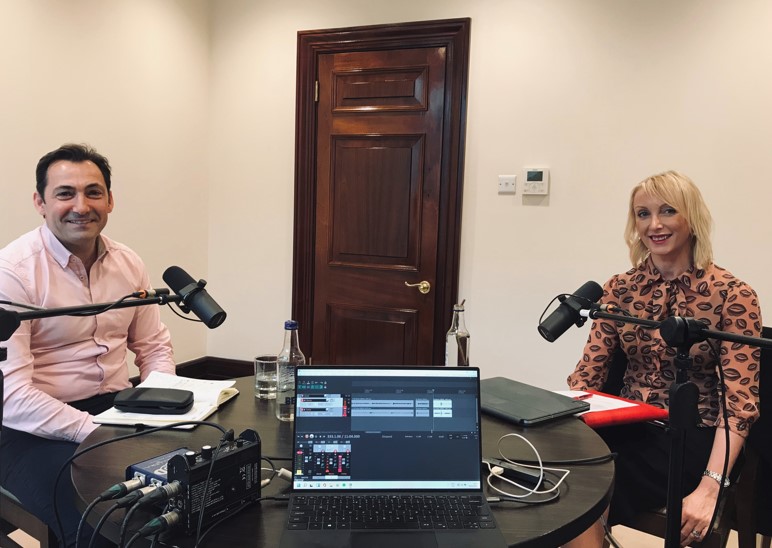
 Overseas businesses can reclaim UK VAT on expenses using a