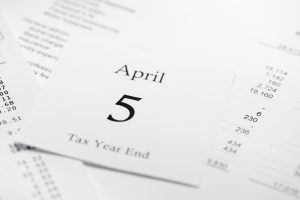
For the vast majority of people the best tax planning is not complicated. A few simple steps carried out by the end of the tax year on 5 April can yield great results. We look at 5 of the most effective things you can do to reduce your tax bill.
1. ISAs
ISAs have been around for nearly 20 years and remain one of the simplest and best ways to shield your investments from tax. The annual contributions limits have jumped up in the past few years, and there are now many types of ISA to choose from:
• Cash ISA
• Stocks and shares ISA
• Innovative Finance ISA
• Help to Buy ISA
• Lifetime ISA
• Junior ISA
Cash ISAs are simply savings accounts in which you do not pay tax on interest. Stocks and shares ISAs can contain shares, unit trusts, corporate bonds and gilts. Innovative Finance ISAs can contain new peer-to-peer loans and crowdfunding investments (debt only, no equity).
Help to Buy ISAs are aimed at first-time home buyers, and offer a 25% bonus up to £3,000 from the Government to be put towards buying a property worth up to £250,000 (£450,000 in London). They are being phased out in favour of Lifetime ISAs (LISAs), which are geared both towards first-time buyers and those looking to save for their retirement. You can put up to £4,000 into a LISA each year, and again you will receive a 25% bonus.
Thanks to the change from Help to Buy to Lifetime ISAs, there is a one-off opportunity in the current tax year. If you have a Help to Buy ISA and transfer the funds into a LISA before 6 April 2018 this will not count towards the LISA limit, allowing you to get a bonus twice.
You can contribute a total of £20,000 into a combination of these ISAs before 6 April 2018. There are various quirks and restrictions, especially around Help to Buy and Lifetime ISAs, so it is recommended that you seek professional advice.
2. Pensions
In contrast to ISAs, the level of pension contributions which attract tax relief has been falling, particularly for high earners. However, they are still a useful tax planning tool, and with the increased options on how to take out funds they have become a more flexible investment vehicle.
Both ISAs and pensions provide a tax-free wrapper for investments, but pensions provide upfront tax relief. However, they are taxable when funds are withdrawn, unlike an ISA. This makes them useful for year-end tax planning, so long as you know what your income will be for the year. For example, extra pension contributions can be used to bring your effective taxable income down to £100,000 to preserve your personal allowance. The restriction of the personal allowance results in an effective marginal tax rate of 60%, so this can save a significant amount of tax.
However, there are restrictions on both how much you can contribute to a pension annually and over your lifetime. The annual allowance is £40,000 gross in 2017/18, including contributions made by employers. This tapers down to £10,000 for higher earners, typically those with income over £150,000. Fortunately you can utilise unused allowances from the three previous years. This is particularly valuable for those caught by the tapered annual allowance, as this was not introduced until the 2016/17 tax year. This means that the unused portion of the full annual allowance of £40,000 from 2014/15 and 2015/16 can be brought forward to 2017/18, even for higher earners.
Finally, those with no income can benefit from a 20% uplift on pension contributions. You can make a contribution of up to £2,880 and the Government will top this up to £3,600. For example, if you have a spouse/civil partner who has no earnings, or a child/grandchild at university, this is a useful free top-up.
3. Inheritance tax gifts
The “7 year rule” for inheritance tax is widely known – if you gift money or assets then you need to survive 7 years for it to be free of inheritance tax. However, up to £3,000 can be given away each year which is immediately free of inheritance tax. If you have not gifted anything in the previous tax year then this can be brought forward, allowing £6,000 of gifts before 6 April 2018. This is per person, so a couple can give away up to £12,000 in a year. If one spouse/civil partner does not have sufficient funds to make their gift, the other can gift it to them first as a transfer between spouses is generally exempt from inheritance tax.
4. Capital Gains Tax planning
Each person can make capital gains of £11,300 in 2017/18 before paying capital gains tax. If your investments have done well then it can be advantageous to sell some of these to crystallise a gain of up to £11,300 without paying tax.
There are rules which prevent you from selling shares on 5 April and buying them back the next day (so-called “bed and breakfasting”). However, although selling shares and buying back the same shares ones back is caught, buying shares of a similar company in the same industry is not. It is also possible for your spouse/civil partner to buy shares in the same company (but not your shares), although care must be taken where you gift them money to do so.
You should ensure that you and your spouse/civil partner both hold assets so that you do not waste the annual CGT allowance.
5. VCT, EIS and Seed EIS investments
The Government encourages investment in riskier companies by giving tax advantages through the VCT, EIS and Seed EIS schemes. Such investments get income tax relief at 30% for VCT and EIS, and 50% for start-ups under Seed EIS. For example, if you subscribe for £10,000 of shares in an EIS-qualifying company before 6 April 2018 you should get £3,000 off your income tax liability in January 2019. Even better, you may be able to carry the relief back to the previous tax year and get a £3,000 refund from HMRC now.
If you have made a capital gain within the past 3 years, EIS and Seed EIS schemes can be used to provide relief from capital gains tax. For EIS schemes this is a deferral relief, delaying the payment of tax. Seed EIS schemes are more generous, exempting gain up to the value of 50% of the investment made.
The bigger picture
With all of these tips one must look beyond the tax advantages and ask if it is the right decision for you. VCT, EIS and Seed EIS investments can be risky. Equally, there’s no point in making a pension contribution or gifting money if you need the funds now.
If any of the above are right for you, we recommend that you seek professional advice to ensure that traps are avoided.
 many manufacturers now offer Ultra-Low Emission electric or hybrid vehicles (“ULEVs”). For many years this was the domain of the Toyota Prius’ and the G-Wiz’s of this world but with Porsche having just released their Panamera e-Hybrid which boasts a CO2 emissions figure of 56g/km, 0-62mph acceleration of 4.6 seconds and a top speed of 172mph, the game has changed.