The Gift Aid Small Donations Scheme
 5 min read
The funding environment is particularly challenging for charities at present, with decreasing corporate giving and ever-more competition for trust and foundation grant income.
Gift aid can, therefore, be a valuable additional resource for charities. Charity Finance Group run an annual Gift Aid Awareness day to promote knowledge of Gift Aid and recent campaigns have been under the banner #TickTheBox.
However, there is an often overlooked scheme that allows charities, and community amateur sports clubs (CASCs) to reclaim Gift Aid on small cash and contactless donations without needing the donor to “tick the box” on a Gift Aid declaration. This is the Gift Aid Small Donations Scheme (GASDS).
So as today is 2026 Gift Aid Awareness Day, let’s take a look at this helpful relief, the rules and the eligibility criteria.
What is the Gift Aid Small Donations Scheme?
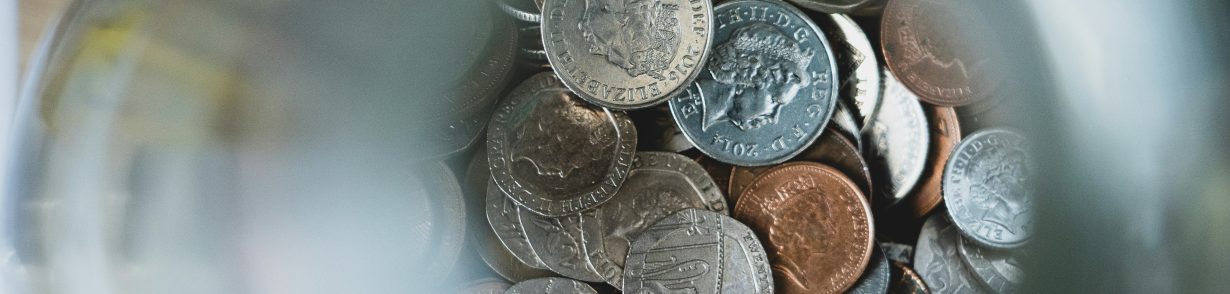
The Gift Aid Small Donations Scheme (or “GASDS”) was introduced back in April 2013 to allow eligible charities and CASCs to claim Gift Aid on small cash (and now contactless) donations – for example cash collected in tins or buckets via street collections, or at religious services.
Who can claim?
To qualify as an eligible charity or CASC, an organisation must:
- Be registered with HMRC; and
- Have claimed Gift Aid:
- in the same tax year as you want to claim GASDS
- without getting a penalty in the last 2 tax years
What is an eligible donation?
The scheme is available to cash and contactless donations of £30 or less.
The donation must have been made by an individual, banked in a UK bank account, and must be used for charitable purposes. No benefit can be received by the donor in return.
Membership fees do not qualify as GASDS donations – nor amounts given through payroll giving.
How much can a charity or CASC claim?
You claim 25% of the eligible donation. A total of £2,000 can be claimed per year – i.e. on gross donations of £8,000.
However, as well as the £2,000 cap, the GASDS claim can’t be more than 10 times your Gift Aid claim – so for example if, in the same tax year, you’ve received £100 of Gift Aid donations then you can claim on up to £1,000 worth of donations through GASDS.
The ‘10 times’ rule does allow a planning opportunity – whilst it may increase administration requirements, the more donations that can be claimed under Gift Aid (by getting donors to complete declarations – even if these are small cash donations too), then more eligible donations can be claimed under GASDS.
Is a donor declaration needed like Gift Aid?
No - the scheme was designed to provide relief for small cash donations where obtaining a signed gift aid declaration is difficult or impractical (such as street collections). A charity or CASC does not actually have to know the identity of the donor, unlike for gift aid. Therefore, there is an admin cost saving from not having to obtain and store Gift Aid declarations as well as a cash receipt benefit.
If Gift Aid is claimed on such a donation, then it does not qualify for GASDS.
Does the donor claim tax relief?
No, donations made via GASDS are not a tax relief for the donor. Therefore, higher-rate or additional-rate taxpayers cannot claim further relief on their tax return for small cash donations made under GASDS.
What if the charity is connected to another charity?
If two or more charities are connected and they do not share a community building (see below) then all of the connected entities share the £2,000 claim limit between them. If you are connected through recent merger, then you may be able to take on the other charity’s claims’ history.
If you are connected and share a community building, then you may be able to make an additional claim as if you have a community building.
Community Buildings
Charities that also have one or more ‘community buildings’, such as village halls or religious buildings, may be able to claim additional amounts, subject to meeting certain conditions.
These conditions can be quite complex but in essence a ‘community building’ is a building, or part of a building, to which the public or a section of the public have access at some or all of the time. Buildings used wholly or mainly for residential purposes, for the sale or supply of goods, or for commercial purposes (except at times when the charity is carrying out a charitable activity in the relevant part and the charity has exclusive use of that part) do not qualify.
In addition, to qualify as a community building, you must have hosted at least 6 charity events in the building and each of these must have been attended by at last 10 people.
How do I claim?
Claims are made via the usual Gift Aid claim form. You will need to make sure you are recording the total amount of cash/contactless donations collected, the date of the collection, and the date it was paid into your bank account.
For events in community buildings, you also need to record:
- The address and postcode of the buildings where the donations were collected
- The type of event
- The number of events held
- The number of people attending (or at least an estimate)
- When the donations were collected
Is there a time limit for claiming?
GASDS claims must be made within two years of the end of the tax year in which the donation was collected. This is different to Gift Aid which has a 4-year claim period.
Summary
GASDS is a very useful scheme, especially for small charities or charities that receive lots of cash donations. The amounts you can claim may not be huge but can still be valuable additional funds for your organisation.
If you have any questions about the scheme, and whether your charity would qualify, do get in touch.